Identifying and controlling invasive plant species is essential for maintaining productive wildlife habitat in Mississippi. Invasive plants reduce native biodiversity, suppress food and cover availability, and often create simplified ecosystems dominated by a few aggressive species. Effective management requires early detection and may require a combination of control methods, including herbicides, prescribed fire, mechanical removal, grazing, and long-term native plant restoration. Successful management depends on persistence and follow-up over multiple years.
Tier 1: Highest-Impact Invasive Species (Priority Control)
Cogongrass
Description:
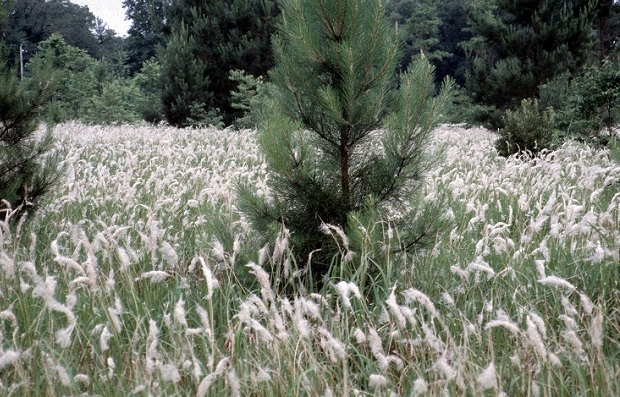
Cogongrass is a highly aggressive perennial grass that forms dense, circular monocultures in fields, roadsides, and timber edges. It has bright yellow-green leaves with a sharp, off-center midrib that can cut skin when handled. In spring, it produces distinctive white, fluffy seed heads that contrast sharply with surrounding vegetation, and in winter it persists as thick, brown thatch that suppresses native plant emergence.
Herbicide Control
- Glyphosate (4 qrts/acre or 2–3% spot spray) + Imazapyr (16 oz/acre)
- Timing: Spring and late-Summer–Fall
- Frequency: 2–3 treatments/year for 2–3 years
- Make sure to spray up to 10 ft around the perimeter of the cogongrass areas to control underground rhizomes.
- Restoration planting of competitive natives after suppression is important
Chinese Tallow
Description:
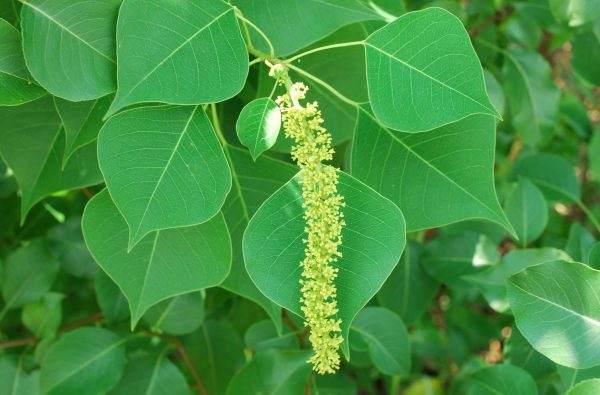
Chinese tallow is a fast-growing deciduous tree that invades wetlands, old fields, and forest edges. It is easily recognized by its diamond- to heart-shaped leaves and its striking red, orange, or yellow fall color. In late summer and fall, it produces distinctive white, waxy seed coatings that give it the nickname “popcorn tree,” and these seeds are widely dispersed by birds and water.
Herbicide Control
- Cut-stump: 20–50% triclopyr or glyphosate
- Basal bark: 10–20% triclopyr ester
- Foliar: 2–3% on seedlings
Non-Herbicide Control
- Mechanical removal effective only if root systems are treated or removed
- Seed source removal is critical (birds spread widely)
Chinese Privet
Description:
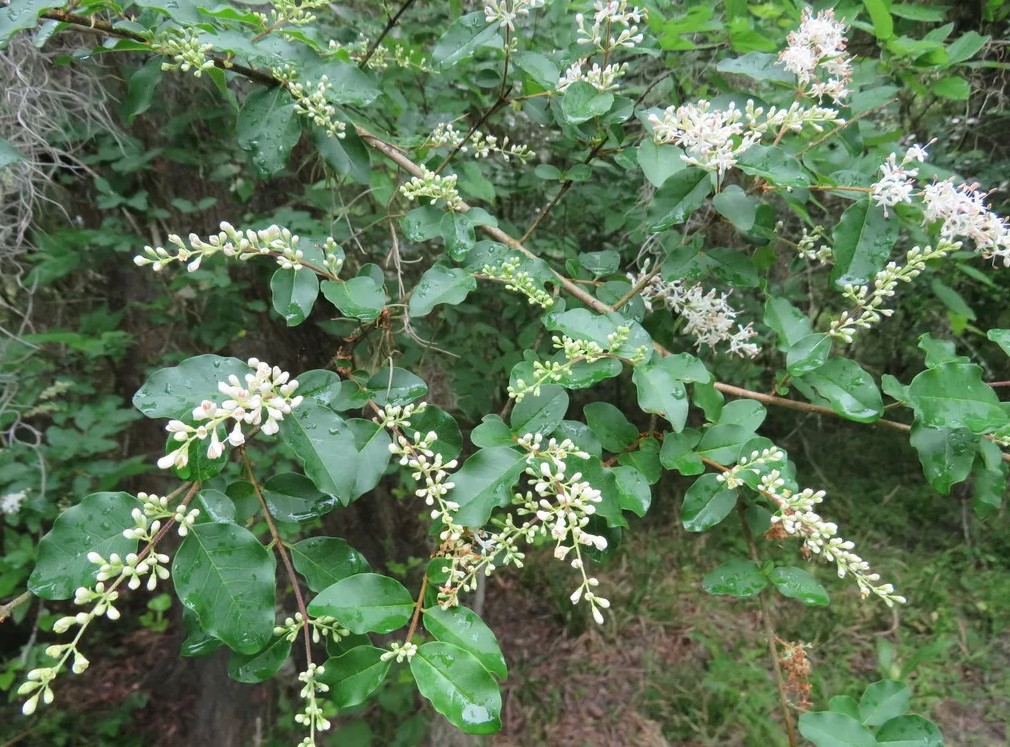
Privet is a semi-evergreen shrub that forms dense, impenetrable thickets in forests, floodplains, and fencerows. It has small, oval leaves with smooth edges and produces clusters of small white flowers in spring. Over time, it creates shaded understories that exclude native seedlings and drastically reduce plant diversity.
Herbicide Control
- Foliar spray: 2–3% glyphosate or triclopyr
- Cut-stump: 20–25% solution
- Basal bark: 10–15% triclopyr ester
- Timing: Late summer–fall
- Frequency: 3–5 years
Non-Herbicide Control
- Mechanical removal useful only when paired with herbicide
- Dense native replanting helps prevent reinvasion
Sericea Lespedeza
Description:
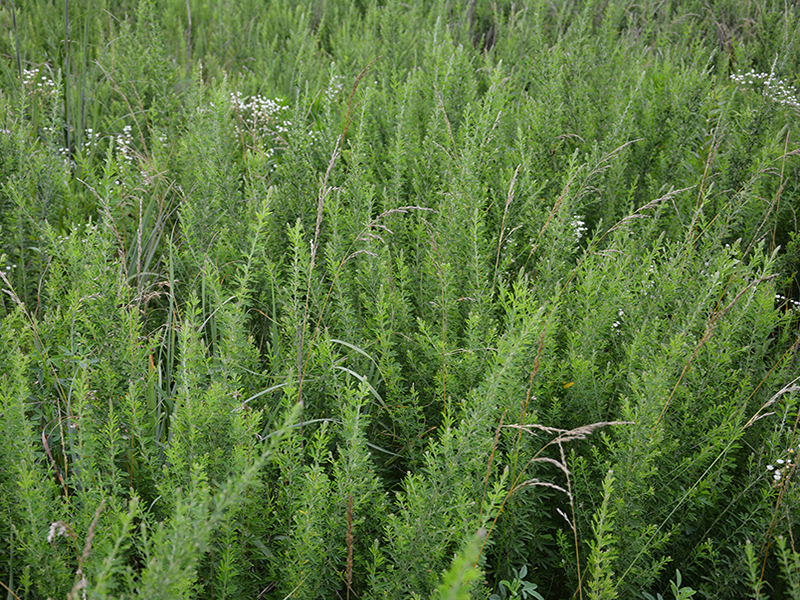
Sericea lespedeza is a perennial forb that invades pastures, roadsides, and old fields, forming dense stands of upright stems with fine, needle-like leaves. In late summer, it takes on a silvery-green appearance and produces small white to cream-colored flowers. Once established, it significantly reduces forage quality due to high tannin content and low palatability.
Herbicide Control
- Metsulfuron methyl: 0.3–0.6 oz/acre + Triclopyr: 1–2 qt/acre (spot or broadcast)
- Timing: Late summer before seed set
Non-Herbicide Control
- Repeated mowing weakens plants over time
- Native warm-season grass competition is essential for long-term control
Tree-of-Heaven
Description:
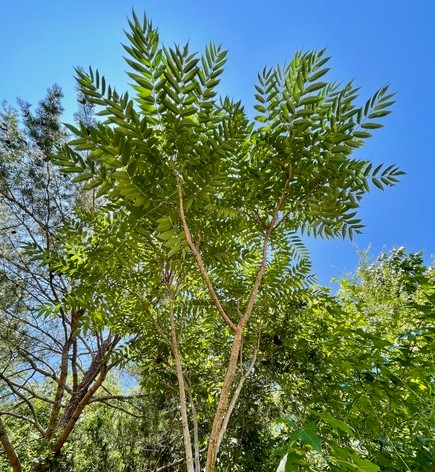
Tree-of-heaven is a fast-growing deciduous tree with large compound leaves composed of many leaflets, each with a distinctive foul odor when crushed. It produces abundant winged seeds and aggressively spreads through root suckering, forming dense clonal stands. It thrives in disturbed soils such as roadsides, old fields, and industrial areas, often excluding all other vegetation.
Herbicide Control:
- Hack-and-squirt: 50–100% glyphosate or triclopyr into cuts
- Basal bark: 20–30% triclopyr ester (small stems)
- Timing: Late summer–early fall
Non-Native Pasture Grasses
(Bermuda, Bahia, Tall Fescue, Vaseygrass)
Description:
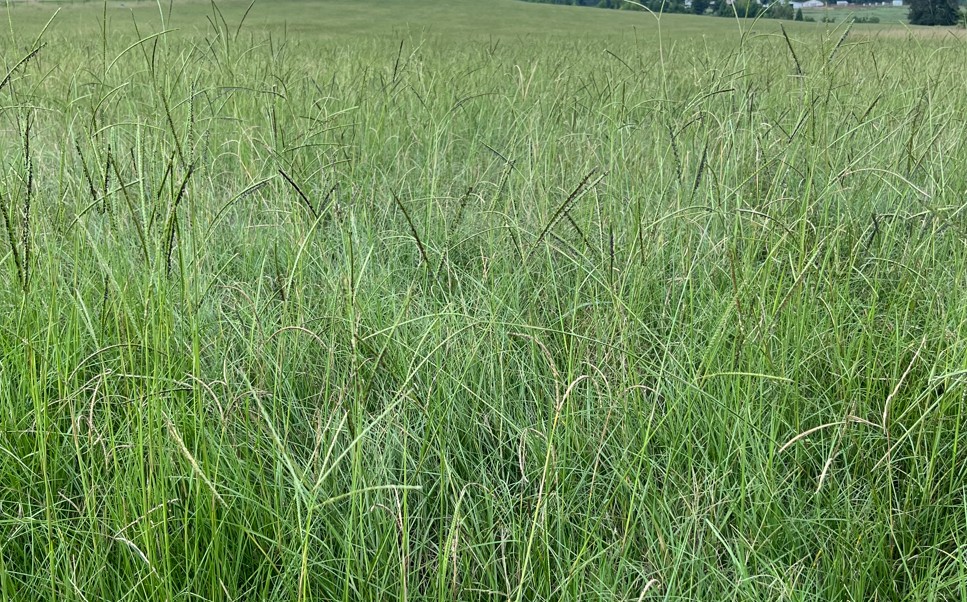
These grasses form dense, simplified sod systems that dominate pastures, roadsides, and disturbed fields. Bermuda grass spreads through aggressive stolons and rhizomes forming tight mats, Bahia grass grows in coarse clumps with distinctive seed heads, and tall fescue forms tall bunches of cool-season grass. Collectively, they reduce plant diversity and eliminate structure needed for many wildlife species.
Herbicide Control
- Glyphosate: 2–5 qt/acre or 2–3% spot spray
- Multiple applications required (2 qt/ac in May-June + 4 qt/ac in July-August)
Non-Herbicide Control
- Prescribed fire reduces litter and improves herbicide effectiveness
- Intensive disking followed by herbicide often needed for conversion
- Conversion to native warm-season grasses (e.g., switchgrass, bluestem) is the long-term solution
Tier 2: High-Impact Spreaders
Japanese Stiltgrass
Description:
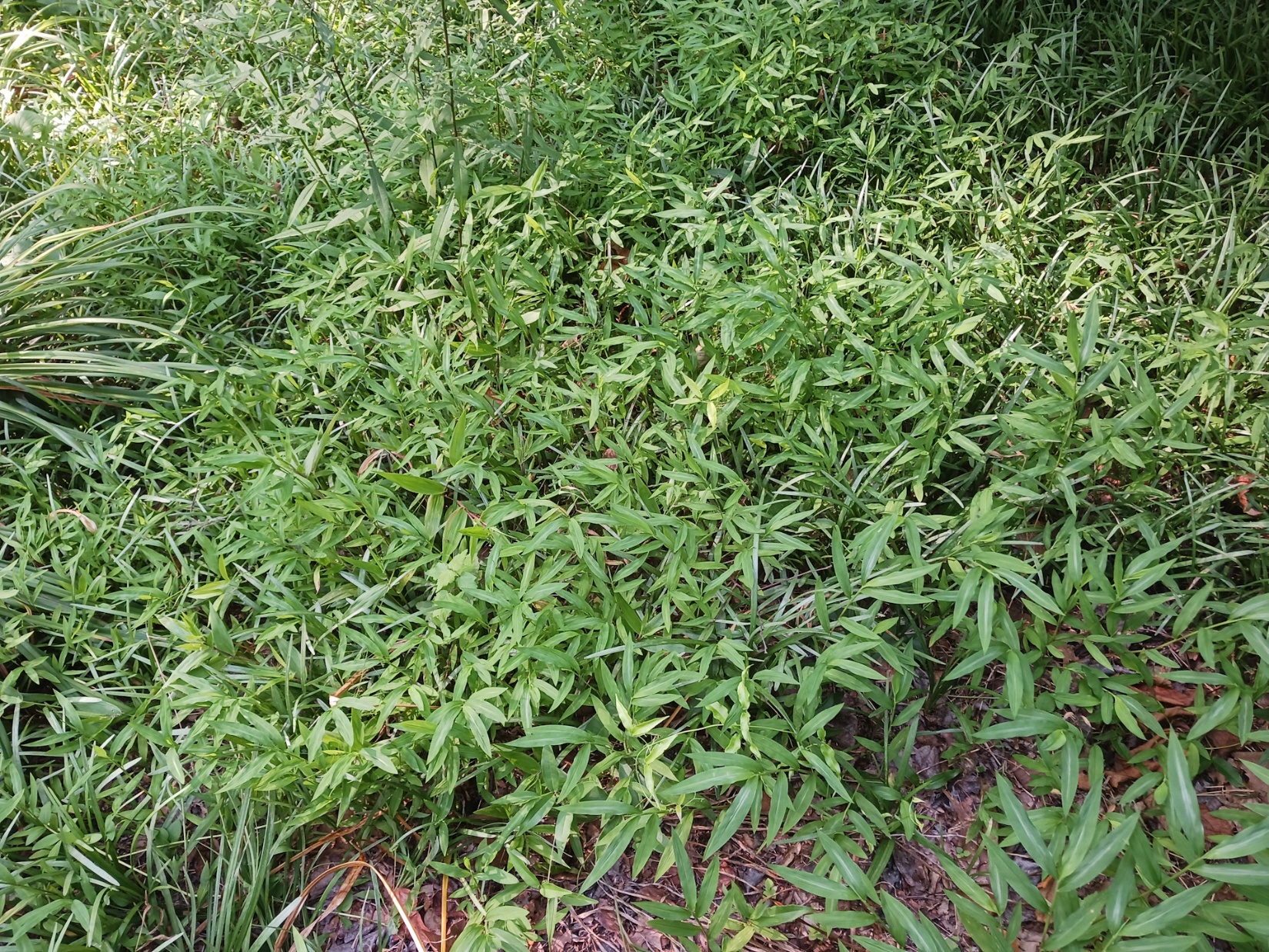
Japanese stiltgrass is a delicate annual grass that thrives in shaded forests and disturbed soils, forming dense carpets across the forest floor. It has light green leaves with a distinctive silver stripe running down the center. By late summer it produces large seed banks and dies back, leaving thick litter that suppresses native regeneration.
Herbicide Control
- Pre-emergent: Imazapic (4–6 oz/acre) + Post-emergent: Glyphosate 1–2%
- Timing: Spring to early-Summer before it seeds out late-Summer
Non-Herbicide Control
- Hand-pulling (small infestations, before seed drop) can work on a very small scale
- Fire reduces litter but does not eliminate seed bank
- Shade competition from native understory reduces reinvasion
Japanese Climbing Fern
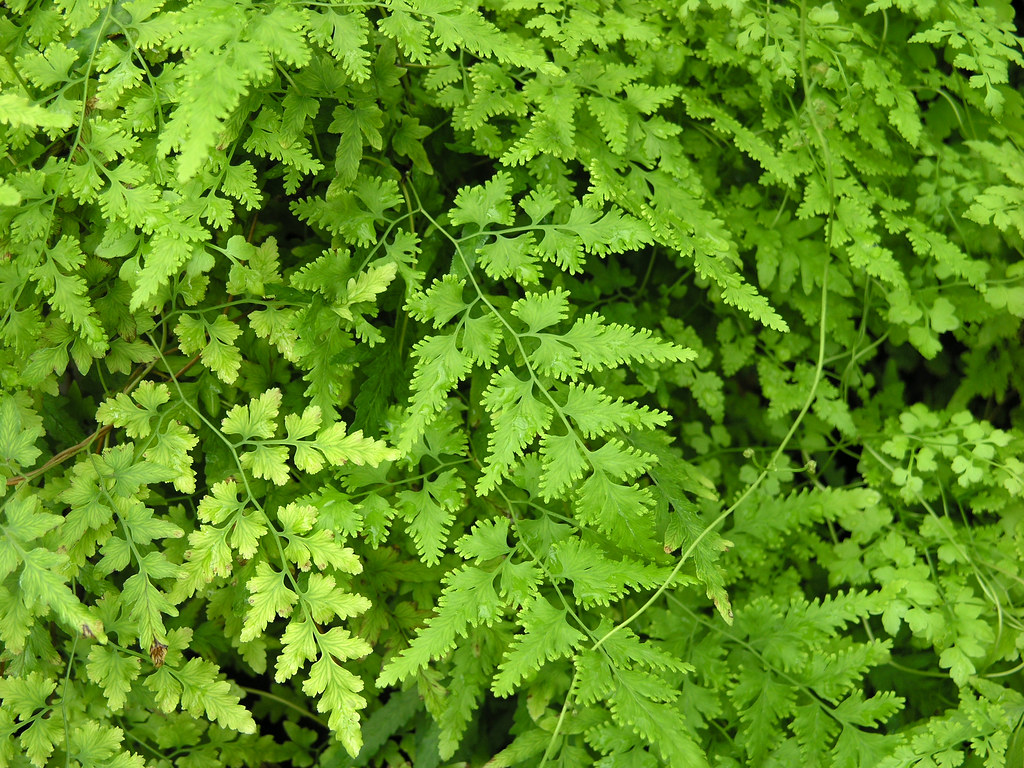
Description:
Japanese climbing fern is a highly aggressive vine-like fern that climbs into shrubs and tree canopies using wiry, twining fronds. It is evergreen in mild winters and produces delicate, lacy leaflets that can form thick mats over vegetation. It reproduces through abundant spores that are easily spread by wind, equipment, and wildlife. Once established, it creates dense blankets that suppress native regeneration and increase fire danger by acting as ladder fuel into tree canopies.
Herbicide Control:
- Glyphosate: 1–2% foliar spray + Imazapyr: 0.5–1% foliar (non-selective areas)
- Timing: Late summer–fall before frost
Japanese Honeysuckle
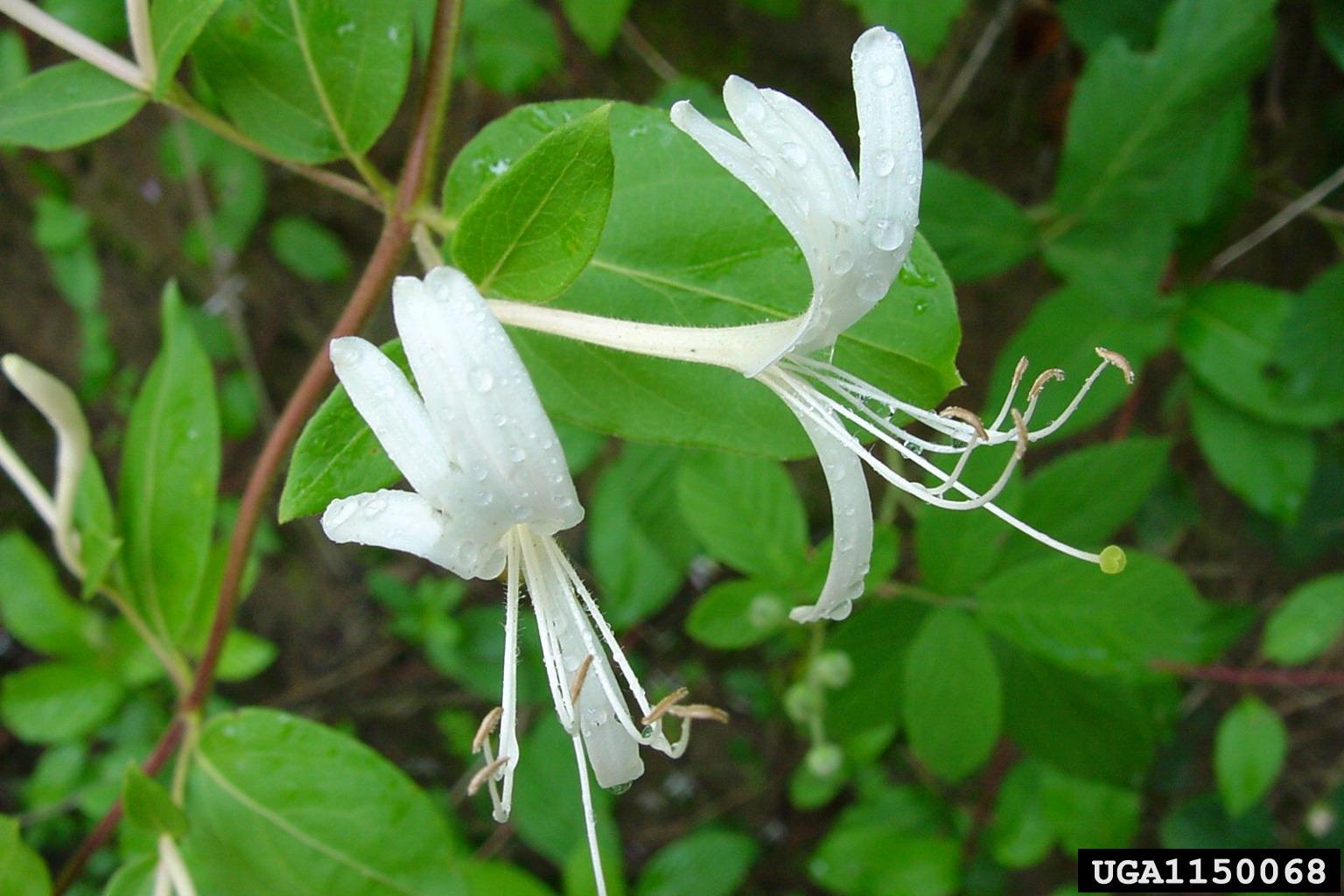
Description:
Japanese honeysuckle is a vigorous evergreen vine that climbs and smothers shrubs and trees. It has opposite leaves that remain green in mild winters and produces highly fragrant tubular flowers that are white turning yellow with age. It spreads rapidly across forest edges and open woods, forming thick vine mats.
Herbicide Control
- Glyphosate or triclopyr 2–3% foliar
- Cut-stump for large vines
Non-Herbicide Control
- Fire weakens vines and improves access for spraying
Kudzu
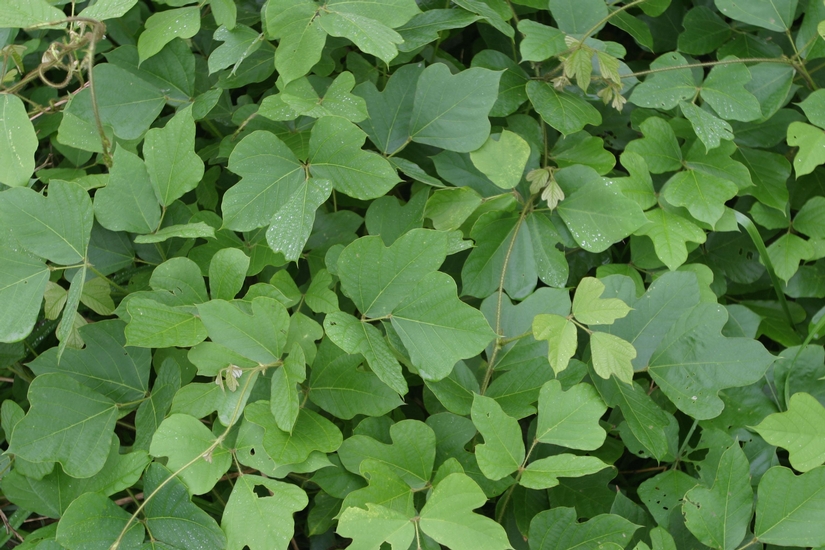
Description:
Kudzu is a fast-growing perennial vine with large trifoliate leaves and thick stems that climb over trees, fences, and structures. In late summer it produces purple flower clusters with a sweet fragrance. It can completely blanket vegetation, blocking sunlight and killing underlying plants.
Herbicide Control
- Option 1 (Most-effective; need commercial licensed contractor: 2,4-D+picloram (Tordon 101 Mixture) at 2 gal/acre, or Picloram liquid (Tordon K) at 0.5 gal/acre
- Option 2 (Effective; no commercial license needed): Metsulfuron (Escort) at 4 oz/acre in pine stands, or Aminopyralid (Milestone) at 7 oz/acre in hardwood stands
- Option 3 (Least-effective): Glyphosate 3–5% foliar or 3–4 qt/acre
- Timing: Late summer–fall
- Multi-year treatment required
Non-Herbicide Control
- Mowing/grazing (suppresses growth but rarely eradicates)
Wisteria
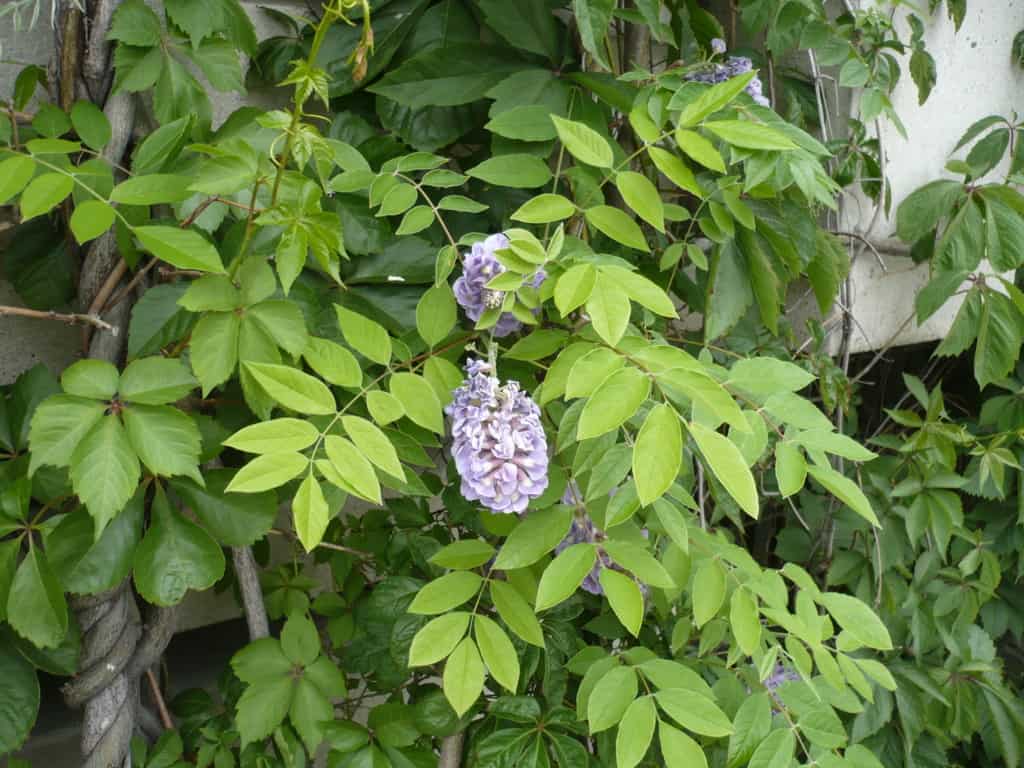
Description:
Wisteria is a woody climbing vine that twists around trees and structures, forming thick, rope-like stems. In spring it produces long clusters of purple flowers that are visually striking but often mask its aggressive growth habit. Over time it can girdle and kill mature trees.
Herbicide Control
- Cut-stump: 20–30% glyphosate or triclopyr
Autumn Olive
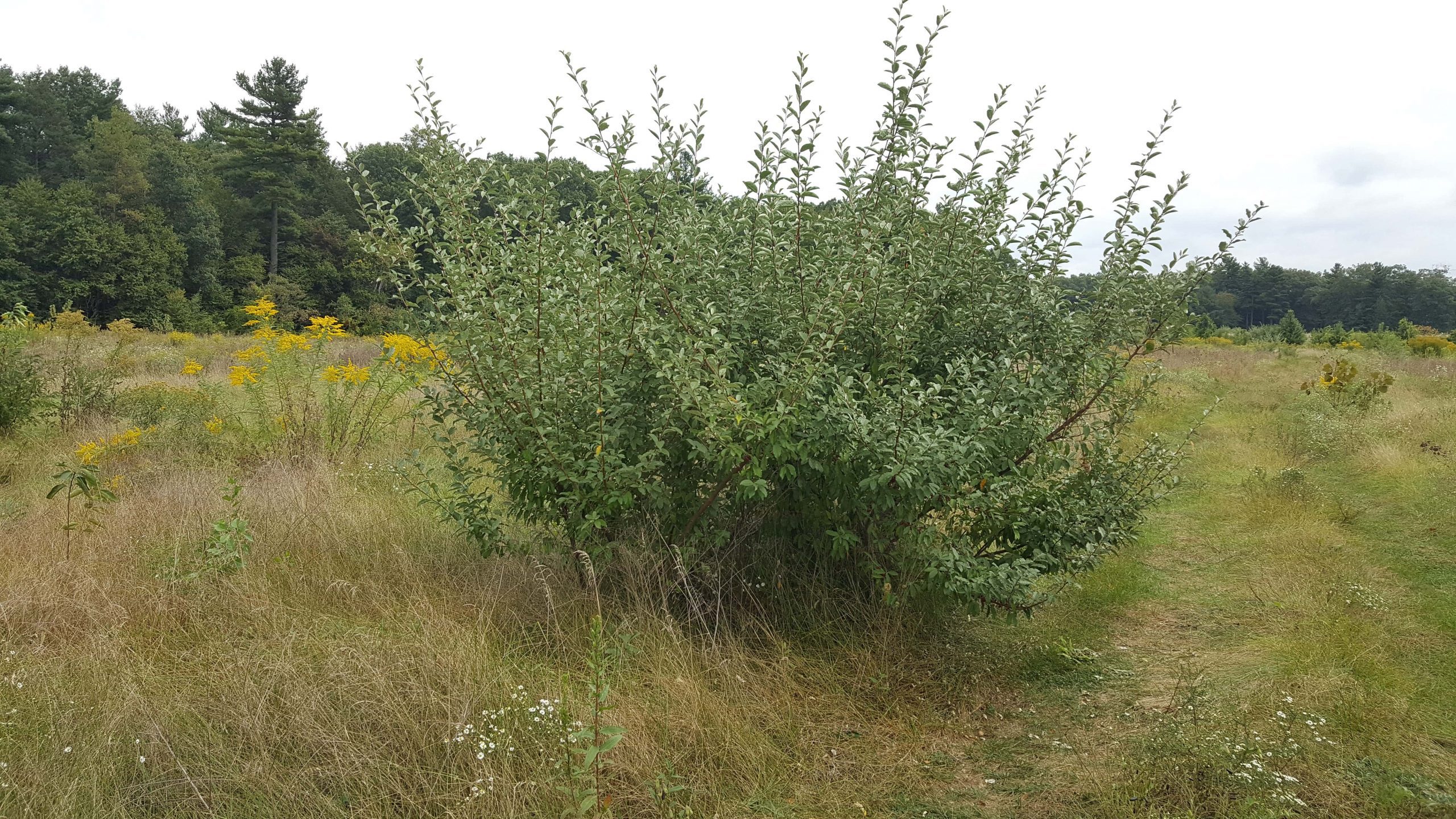
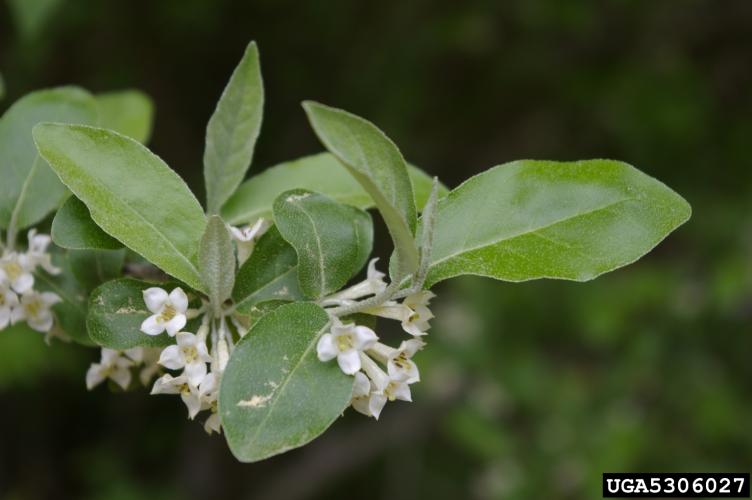
Description:
Autumn olive is a thorny, fast-growing shrub with silvery-backed leaves and abundant red-speckled berries that ripen in fall. It is commonly found along roadsides, old fields, and disturbed sites where birds spread its seed widely. It alters soil nitrogen levels and outcompetes native shrubs.
Herbicide Control
- Cut-stump: 20–30% glyphosate or triclopyr
Non-Herbicide Control
- Mechanical removal effective only with herbicide follow-up.
Bradford (Callery) Pear
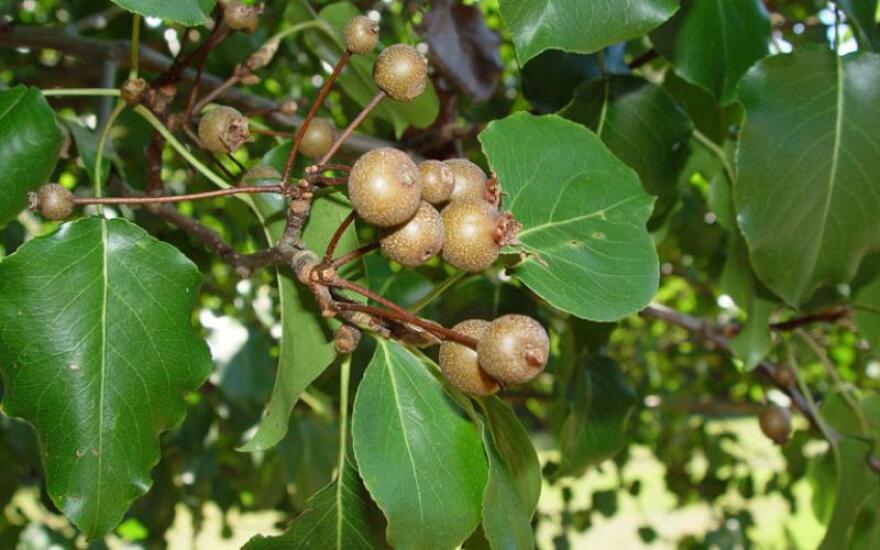
Description:
Bradford pear is a small ornamental tree that has escaped cultivation and now invades fields, pastures, and forest edges. It is easily recognized by its early spring white blossoms and dense, pyramidal crown. Wild populations are often thorny due to hybridization, forming impenetrable thickets that exclude native vegetation. It spreads rapidly via bird-dispersed fruit.
Herbicide Control:
- Cut-stump: 20–50% glyphosate or triclopyr
- Basal bark: 10–20% triclopyr ester
- Timing: Year-round (best fall–winter)
Trifoliate Orange
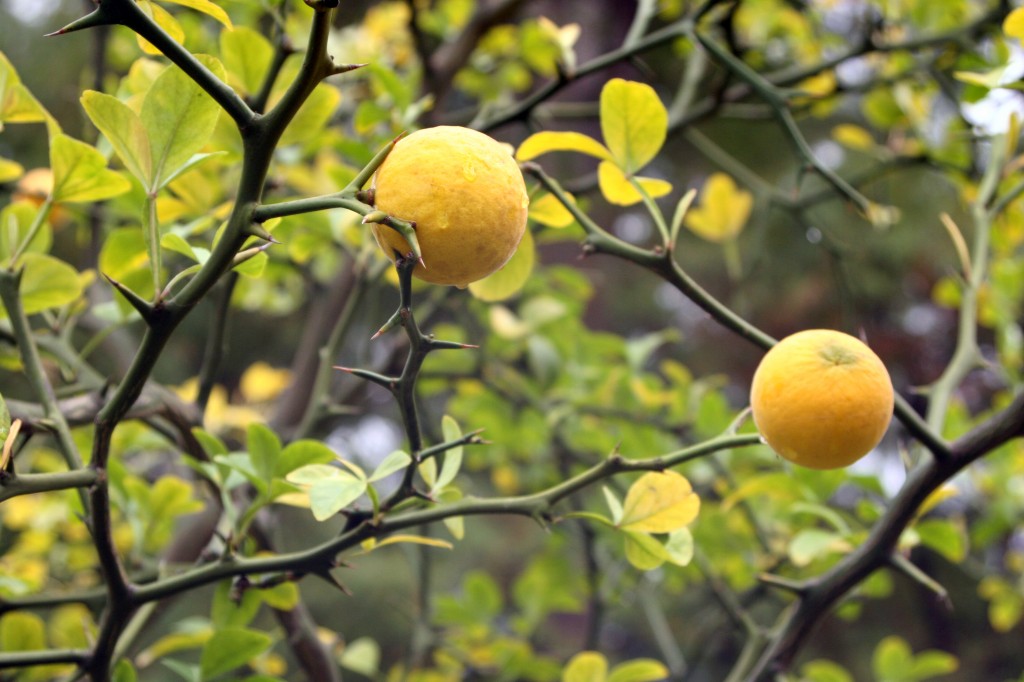
Description:
Trifoliate orange is a thorny deciduous shrub or small tree that forms dense, impenetrable thickets. It is easily identified by its three-part compound leaves and large, sharp thorns. In spring it produces white citrus-like flowers, followed by small yellow fruit that persist into winter. It is commonly found along fence rows, abandoned fields, and woodland edges.
Herbicide Control:
- Cut-stump: 20–50% glyphosate or triclopyr
- Basal bark: 10–20% triclopyr ester
- Timing: Dormant season or late summer
Johnsongrass
Description
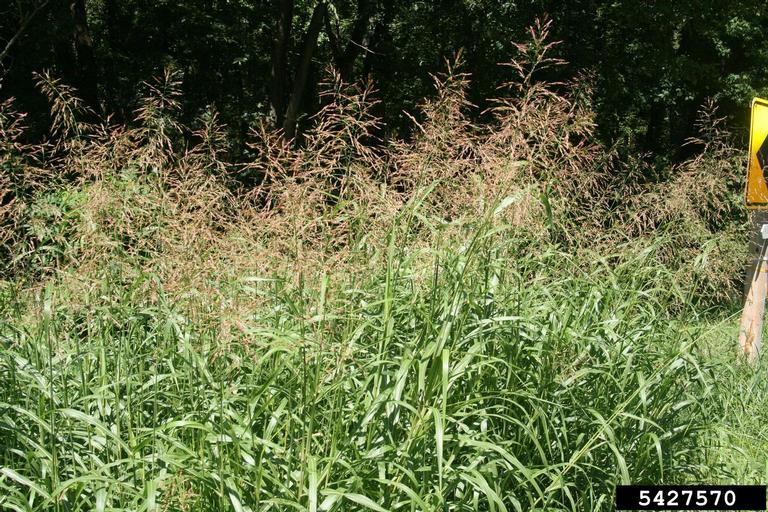
Johnsongrass is a tall, fast-growing perennial grass that often reaches 4–8 feet in height and is commonly found in roadsides, field edges, and disturbed agricultural ground. It has broad, corn-like leaves with a prominent white midrib and produces large, open seed heads that resemble sorghum or millet. When crushed or stressed, especially after frost or drought, it can emit a characteristic “almond-like” odor due to prussic acid compounds. It spreads aggressively through both seed and an extensive underground rhizome system, allowing it to quickly form dense colonies.
Herbicide Control
- Sulfosulfuron (Outrider): 2 oz/ac
- Timing: May-June
- Frequency: Multiple treatments per year for 2–3+ years due to rhizomes
Tier 3: Localized but Persistent Species
Chinaberry
Description:
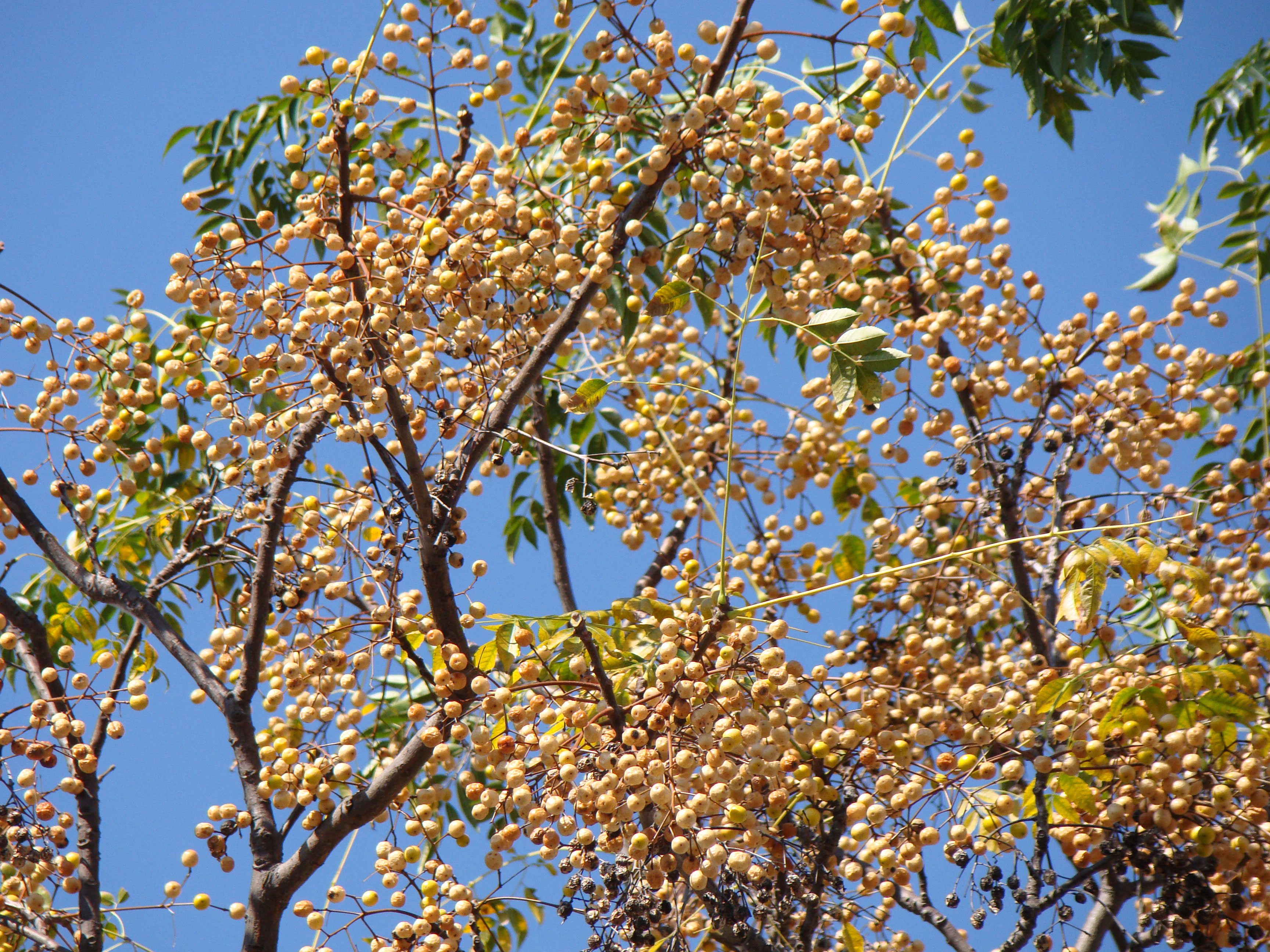
Chinaberry is a small to medium-sized tree with compound leaves made up of many leaflets and produces clusters of yellow, marble-like berries that persist into winter. It commonly invades fence lines, woodland edges, and disturbed areas where birds spread its seed.
Herbicide Control
- Cut-stump: 20–50% glyphosate or triclopyr
- Basal bark: 10–20% triclopyr ester
Non-Herbicide Control
- Seed tree removal is highest priority
Multiflora Rose
Description:
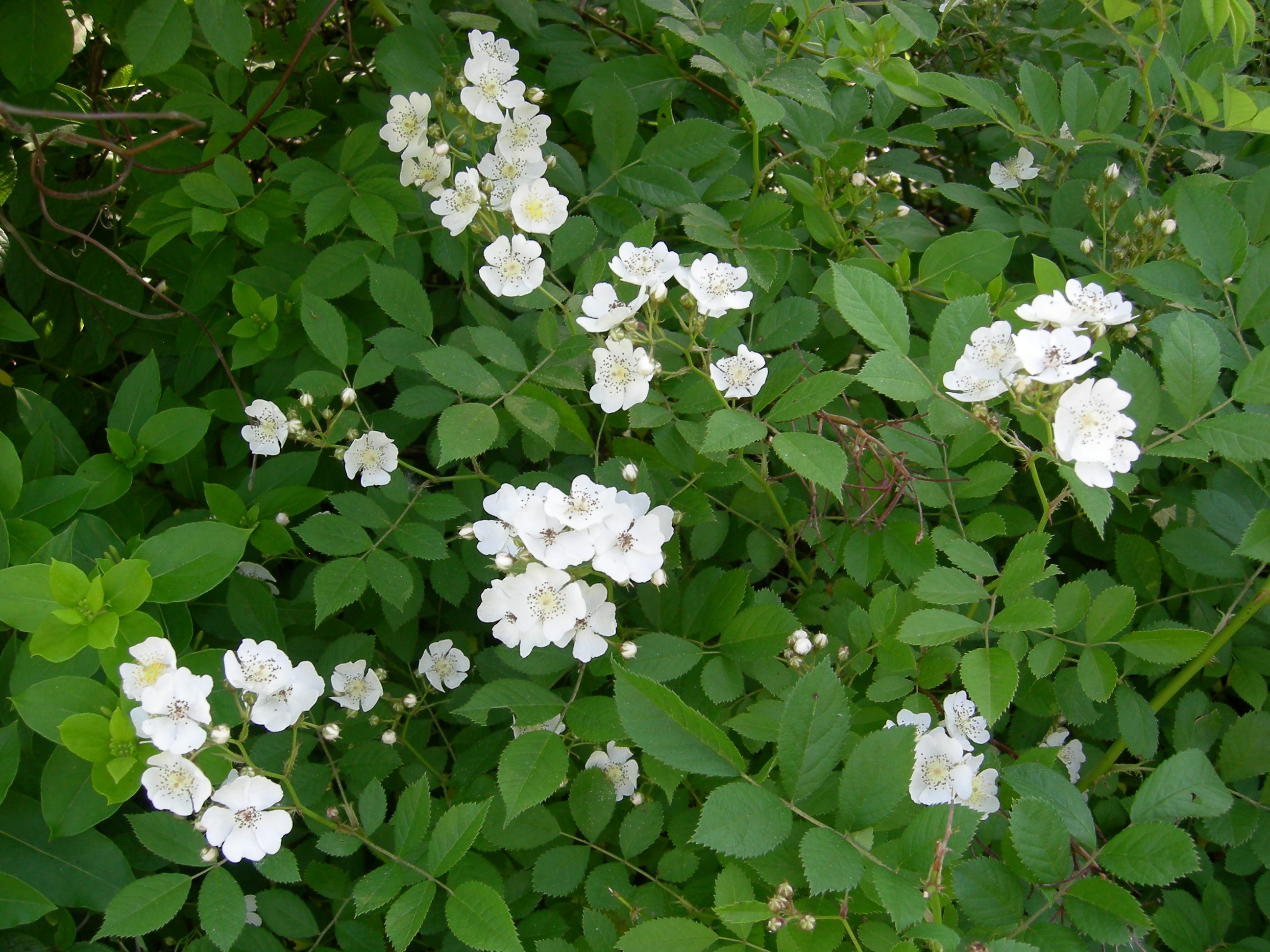
Multiflora rose is a thorny shrub that forms dense, arching thickets capable of excluding people, livestock, and wildlife movement. It produces clusters of white flowers in spring and red rose hips in fall that are readily spread by birds.
Herbicide Control
- Triclopyr 1–2% foliar or 20% cut-stump
Non-Herbicide Control
- Goats provide effective repeated browsing control
Conclusion
Invasive plant control in Mississippi requires an integrated management strategy. Herbicides are often the most effective tool for killing established plants. Without follow-up and re-establishment of desirable vegetation, invasive plants will almost always return.
For more information about wildlife management visit: