By Jim Beaugez
Summer months on Mississippi waterways offer some of the state’s best recreation opportunities. The numerous navigable rivers and lakes are hotspots for taking a cool dip in the water, from the Tombigbee and Pearl rivers to more than a dozen reservoirs.
Reaching a favorite summer fishing or swimming spot or simply spending time on the water with family and friends, often means riding in a motorized boat. For that reason, three-quarters of all boating accidents occur between May and September, according to the U.S. Coast Guard.
The most frequent causes of boating accidents are inattention and inexperience by the boat operator, followed by improper lookout and excessive speed. Together, these preventable causes were the primary contributing factors in approximately 41% of all boating accidents.
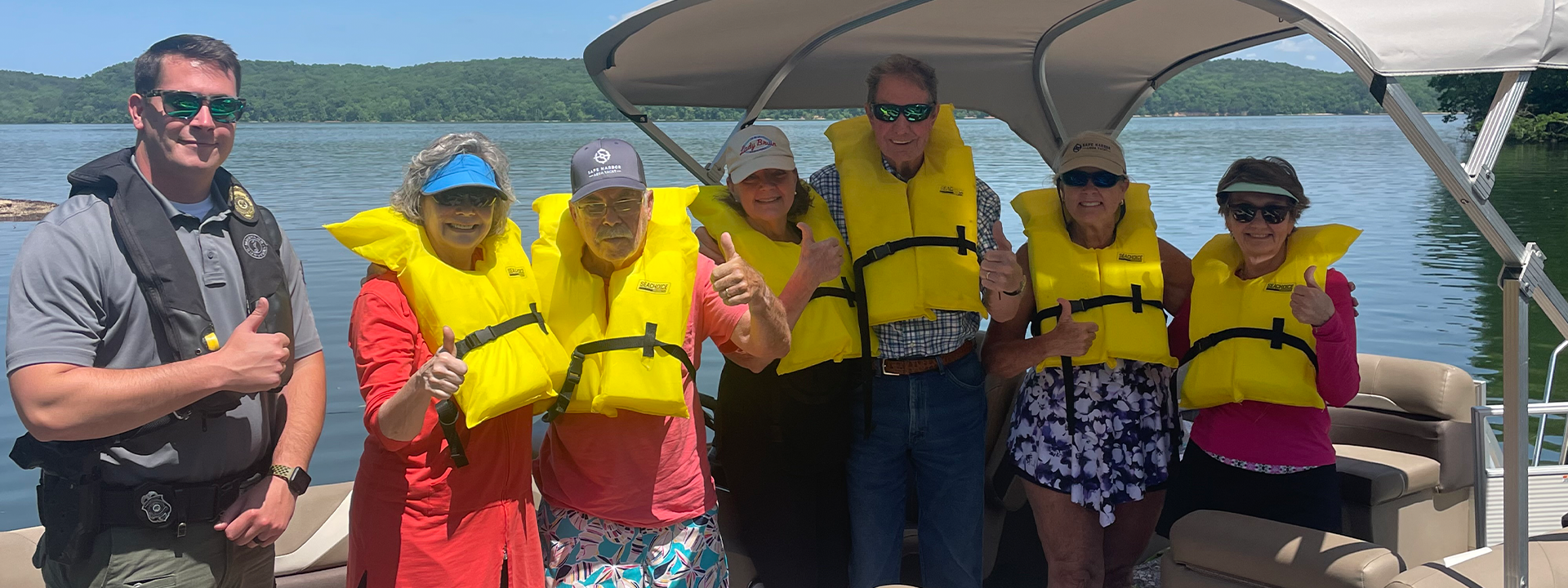
The keyword there — preventable — is of special interest to the boating safety investigators and coordinators at MDWFP. Their specialty is ensuring that boaters on Mississippi waterways follow safety regulations. Topping the list of concerns for boaters is the single item most likely to save lives: personal flotation devices (PFDs), commonly known as life jackets.
Making sure the PFD fits properly is crucial. If a child wears an oversized life jacket, for example, it will likely not keep the child’s head above water. Choosing the proper PFD takes knowing the differences between vest classifications:
- Class I: Designed for offshore use, where a rescue operation may be prolonged
- Class II and III: Intended for shorter rescue times and allow more movement, making them more common among boaters on inland and near-shore waters. Class III inflatable PFDs, often used by professional fishermen and marine law enforcement, are low-profile vests with internal bladders that in‑ate on demand. Inflatable PFDs allow less encumbered movement than typical vests. According to state law, every vessel must carry one U.S. Coast Guard-approved PFD for each passenger.
- Class IV: A throwable device like a ring buoy or a buoyant cushion
- Class V: Designed for specific restricted use; hybrid device that must be worn to be counted as a regulation PFD.
Along with summer, gatherings and events on waterways around the state, such as Fourth of July celebrations, where boaters gather to watch fireworks displays. Those events lead to higher traffic on lakes and rivers, as well as the challenges of night-time boat navigation. Under normal circumstances, these situations can lead to more accidents, especially if a boat stalls or runs out of fuel.
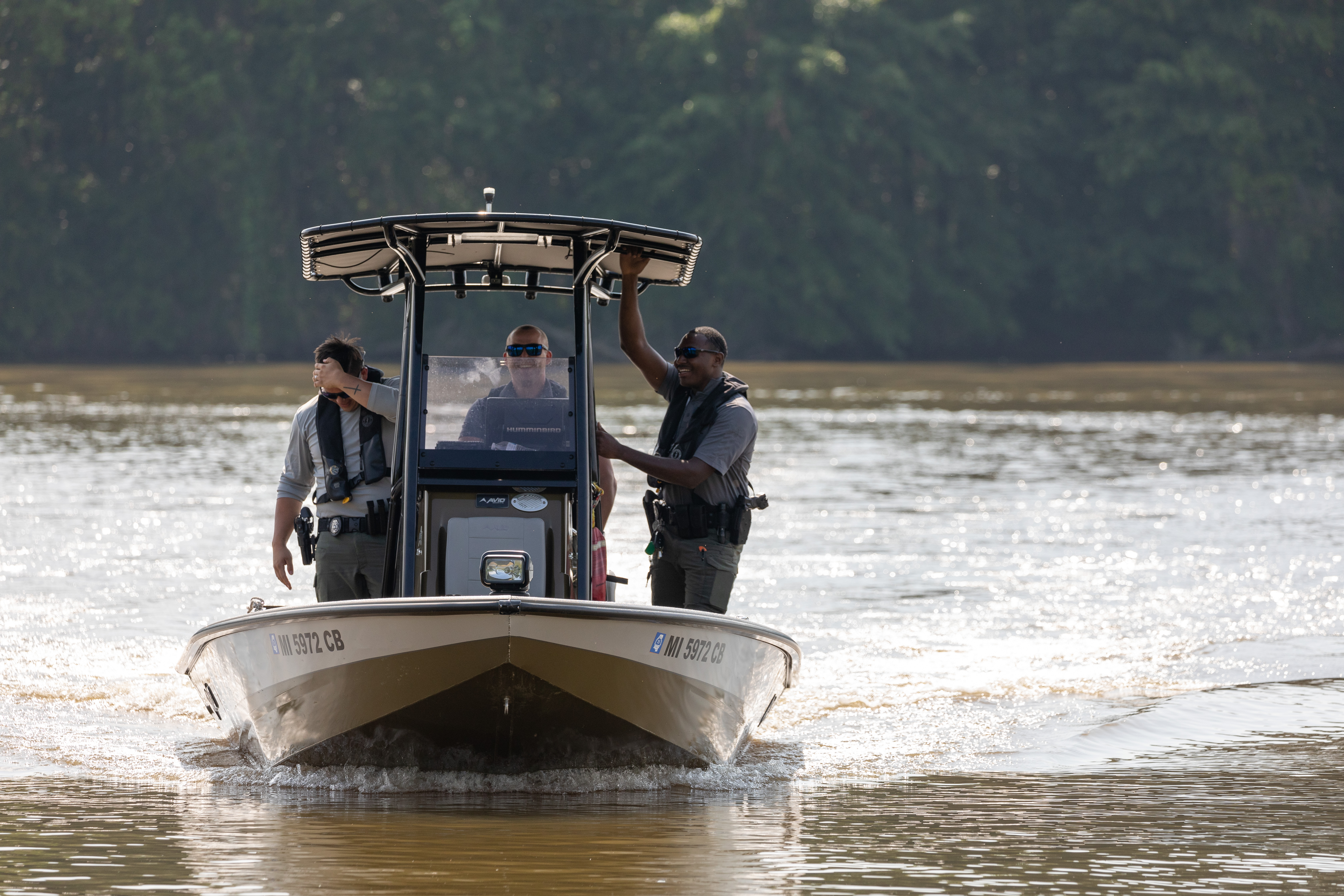
Weather hazards also pose risks for summertime boaters. Avoiding storm systems associated with cold fronts, as well as typical pop-up thunderstorms, is as easy as checking the forecast before leaving or watching the skies. Today, inland and near-shore boaters are likely within range of cellular towers and can access weather radar on their smartphones.
Mississippi law requires boaters to ensure their vessels are in seaworthy condition, with proper running lights red at port-side bow, green at starboard bow, and white at stern — as well as a fire extinguisher and a sound-producing device, such as an air horn, on board at all times.
Following other smart rules of thumb can be a lifeline for boaters in distress. A disaster kit that includes flares, a radio, and oars can allow boaters to signal to other boats and move the vessel away from high-traffic areas if the engine stalls. Extra food and water can help alleviate the stress of being stranded on the water for extended periods.
Important to ensure the safety of the boat operator and passengers. Mississippi offers online boater education for operators to learn the basics of boating and safe, legal practices. Completion of a boating safety course is required in Mississippi for boat operators born after June 30, 1980; however, it can be beneficial for boaters of all ages and experience levels.
10 Boating Safety Tips from MDWFP
1. BE WEATHER WISE: Always check local weather conditions
2. FOLLOW A PRE-DEPARTURE CHECKLIST: Be prepared for any possibilities on water
3. USE COMMON SENSE: Know your surroundings and operate at safe speeds
4. DESIGNATE AN ASSISTANT SKIPPER: Make sure more than one person can operate the boat
5. DEVELOP A FLOAT PLAN: Inform someone you can trust of your boat trip details
6. MAKE PROPER USE OF LIFE JACKETS: The majority of drowning victims were not wearing PFDs
7. AVOID ALCOHOL: The chance of being in an accident doubles if alcohol is involved
8. LEARN TO SWIM: Find a class at a YMCA or Red Cross
9. TAKE A BOATING SAFETY COURSE: Offered by state agencies and U.S. Coast Guard Flotilla
10. CONSIDER A FREE SAFETY CHECK: Offered by U.S. Coast Guard
Jim Beaugez is a freelance writer for Mississippi Outdoor.
Fishing and Boating