
Written by: Chandler Strickland
Edits by: Pierce Young
When planting a food plot, it’s easy to focus on seed variety, seeding rates, fertilizer, soil preparation, and planting dates. But there is another factor that can have just as much impact on the final stand: planting depth.
You can spend money on quality seed and fertilizer, prepare the soil properly, and plant at the right time—but if the seed is placed at the wrong depth, much of that investment can be wasted.
A food plot with poor seed placement may result in slow germination, weak seedlings, thin stands, and bare spots. In contrast, getting seed at the appropriate depth can improve germination and produce a more uniform, productive stand.
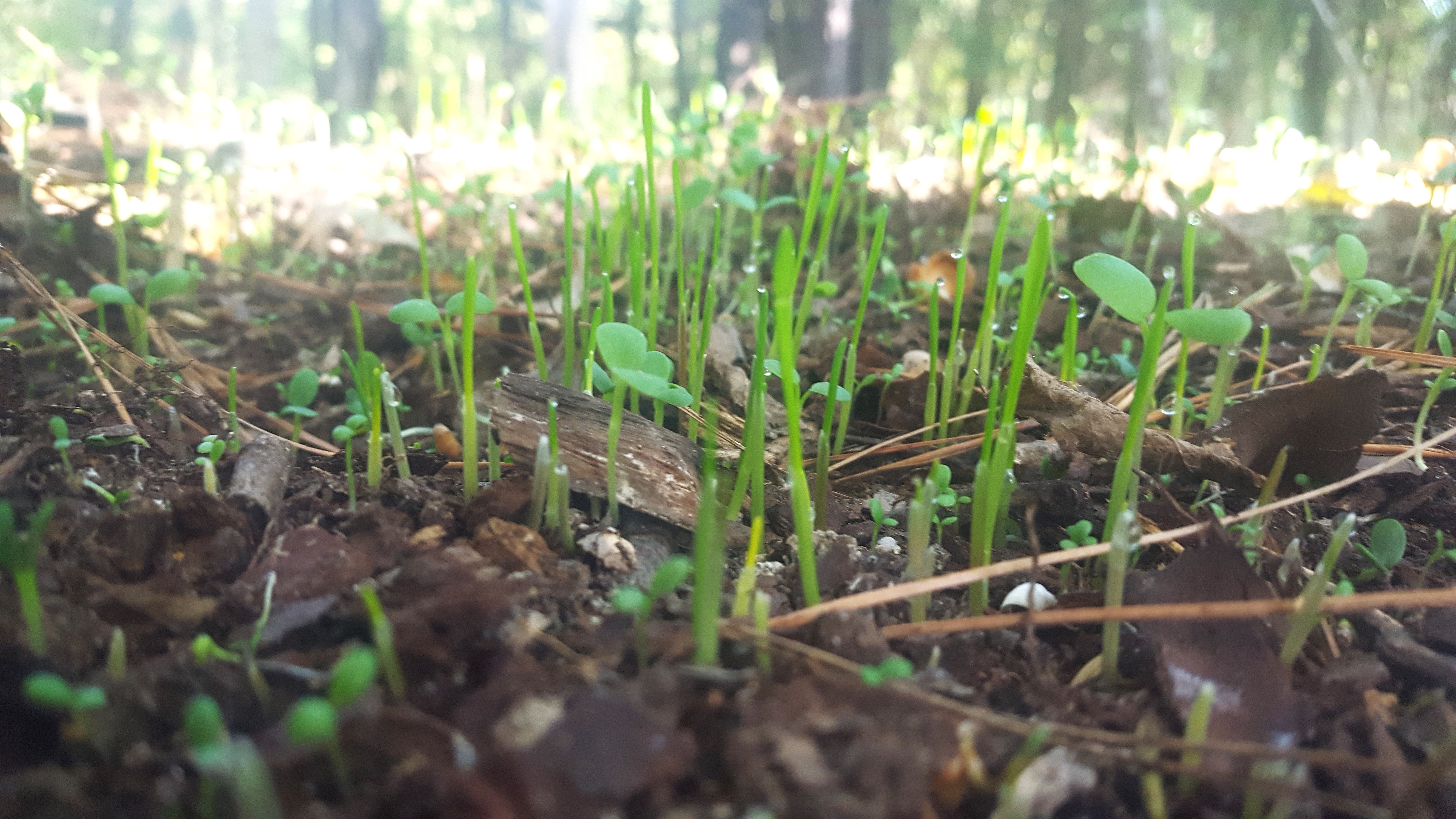
Why Planting Depth Matters in Food Plots
Every seed contains a limited amount of stored energy that allows the developing seedling to emerge from the soil.
If a seed is planted too deep, the young seedling may use up its stored energy before it reaches the surface. This is particularly important with small seeds, which simply don't have enough energy reserves to emerge from deep soil.
If a seed is planted too shallow, it can be vulnerable to drying out, being washed away by heavy rainfall, or being eaten by birds and other wildlife before it can establish.
The goal is to place the seed where it has access to adequate moisture and good seed-to-soil contact, while still being close enough to the surface for the seedling to emerge successfully.
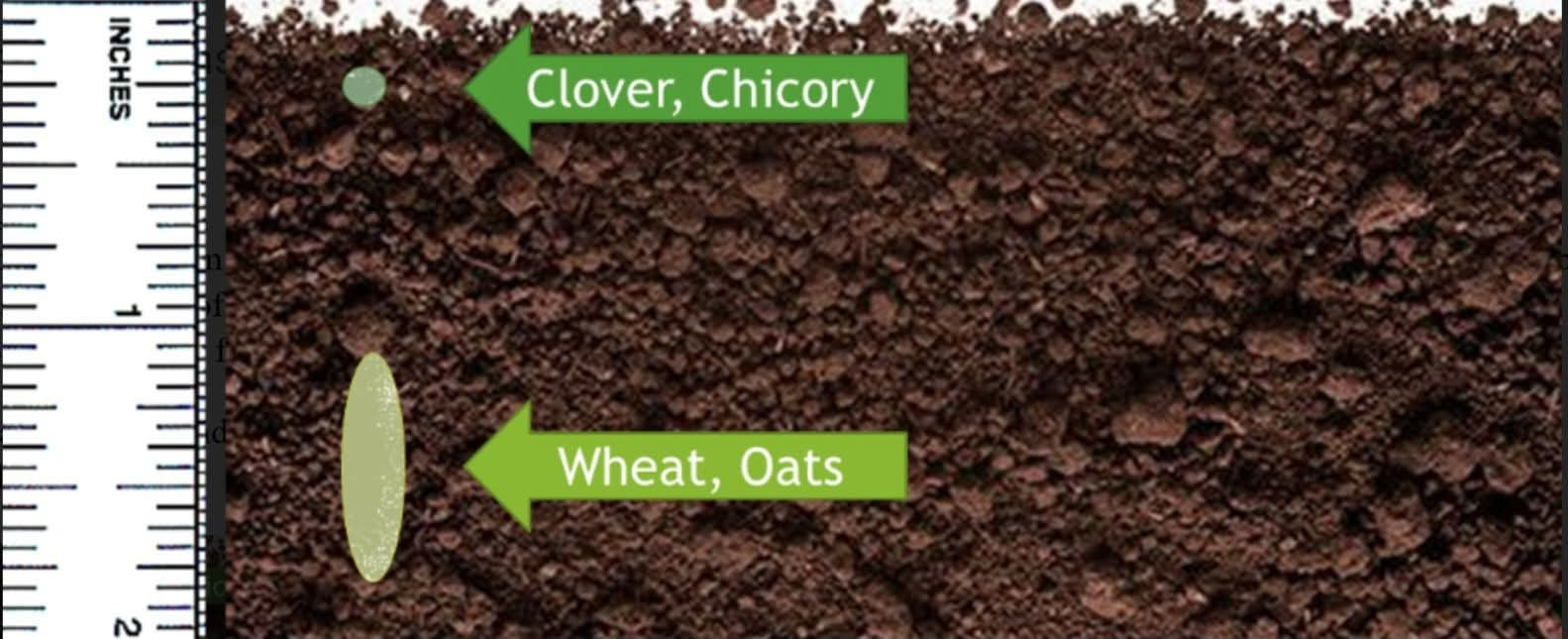
Seed Size Determines Depth
One of the simplest rules to remember is:
Small seeds should generally be planted shallow, while larger seeds can be planted deeper.
Small-seeded crops such as clover, chicory, brassicas, alfalfa, and American jointvetch generally perform best when broadcast on the soil surface or covered very lightly—usually no more than about ¼ inch.
Larger-seeded crops such as wheat, oats, cereal rye, soybeans, peas, and cowpeas can tolerate deeper placement because their larger seeds contain more stored energy.
However, deeper doesn't automatically mean better. Even large seeds can be planted too deep, particularly in heavy soils or when soil conditions are less than ideal.
Common Food-Plot Seeds and Depths
| Seed | Approximate Planting Depth |
| Clovers | Surface–¼ inch |
| Brassicas, Jointvetch | ¼–½ inch |
| Grains (wheat, oats, cereal rye) | ½–1½ inches |
| Soybeans, Cowpeas, Winter Peas | 1–2 inches |
These are good general starting points, but soil type, moisture, equipment, and local conditions can affect the ideal depth.
Getting Small Seeds Established: Don't Bury Them
One of the most common food-plot mistakes is planting small seeds too deep.
Clover, jointvetch, and many brassicas, for example, have relatively small seeds and limited energy reserves. They don't need to be buried several inches beneath the soil.
For these crops, the goal is usually good seed-to-soil contact rather than deep soil coverage.
After preparing the seedbed, broadcast the seed evenly across the surface. Do not drag soil over the top of them. Cultipacking can help press the seed against the soil without burying it too deeply. If you have a seed drill, make sure you have a small-seed "clover" box for proper planting depth, and if not, broadcast the small seeds on top.
In many situations, simply broadcasting small seed onto a properly prepared, firm seedbed and allowing rainfall to provide additional soil contact can produce excellent results.
Larger Seeds Needs to Be Covered
Cereal grains, soybeans, cowpeas, winter peas, and other larger-seeded crops need to be planted deeper.
However, deeper doesn't always mean better. Planting large seeds too deep can slow emergence and lead to weak or uneven stands, especially in heavy soils or when the soil becomes crusted after a heavy rain.
The objective is to put it deep enough to provide adequate moisture and protection without making emergence unnecessarily difficult.
If broadcasting, make sure to follow-up by dragging/harrowing the field to cover the large seeds. If drilling, make sure your equipment is calibrated correctly.
What About Seed Mixtures?
Many food-plot blends contain several different types of seed, big and small, mixed together. The challenge is that these seeds don't all have the same ideal planting depth.
If all of the seed is planted at the same depth, some species may be positioned correctly while others are too deep or too shallow.
Seed companies often compensate for this by doubling the seed rate, so no matter how you plant it something green will come come up and some amount of each seed will be visible in the plot. The problem is you are wasting a lot of seed and money by doing it this way.
The best approach is to buy and plant the larger seeds first, drag to cover them, then broadcast the smaller seeds over the top. This allows each type of seed to be placed closer to its preferred depth. This is the same for using a seed drill. Make sure small seeds are separate and planted using a seed drill "clover" box for small seeds, or else use a grain drill for larger seeds and broadcast the smaller seeds on top.
The Bottom Line
Proper planting depth is one of the simplest—and most overlooked—ways to improve food-plot success.
You don't necessarily need more seed, more fertilizer, or a more expensive seed blend to get a better stand. Sometimes, you simply need to put the seed in the right place in the soil profile.
Taking a few extra minutes to set the proper planting depth can improve germination, create a more uniform stand, reduce wasted seed, save money, and ultimately provide more forage for wildlife throughout the season.
For more wildlife management information visit: