
Written by: Kevin Owens
Edits by: Pierce Young
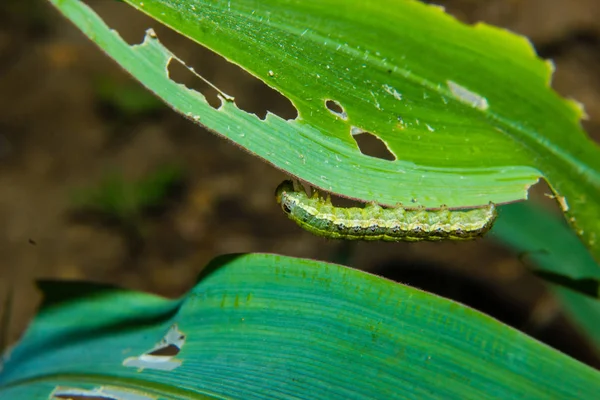
Armyworms are one of the most damaging insect pests affecting Mississippi food plots and other forage-based systems. Their ability to appear suddenly and consume large amounts of vegetation in a short period makes them especially concerning for land managers who rely on productive forage for wildlife. Once populations build, they can strip fields in a matter of days, turning healthy stands into heavily damaged or completely defoliated areas.
Effective management depends on understanding armyworm biology, consistent scouting, and timely use of integrated pest management (IPM) strategies supported by recommendations from the Mississippi State University Extension Service.
Understanding Armyworms in Mississippi
Several species of armyworms occur in Mississippi, but the fall armyworm is the most common and economically important. These insects do not typically survive Mississippi winters in large numbers. Instead, populations migrate northward each year from more southern regions, often building rapidly during late summer and early fall when conditions are warm and humid.
Armyworms are caterpillars (larval stage of moths) that feed aggressively on grasses and other vegetation. Their feeding behavior changes as they develop:
- Young larvae scrape and skeletonize leaf surfaces
- Larger larvae consume entire leaves and stems
- Heavy infestations can quickly create a “scorched” or burned appearance in fields
Dense, actively growing forage—often ideal for wildlife habitat—can also attract egg-laying moths, making productive food plots especially vulnerable during peak activity periods.
Identifying Armyworm Damage Early
Early detection is critical because infestations can escalate rapidly. Land managers should regularly watch for:
- Ragged or irregular leaf edges caused by chewing
- Thinning forage stands or rapidly disappearing grass cover
- Brown or bare patches spreading across fields
- Visible caterpillars feeding in large numbers
- Increased bird activity (often feeding on larvae in infested areas)
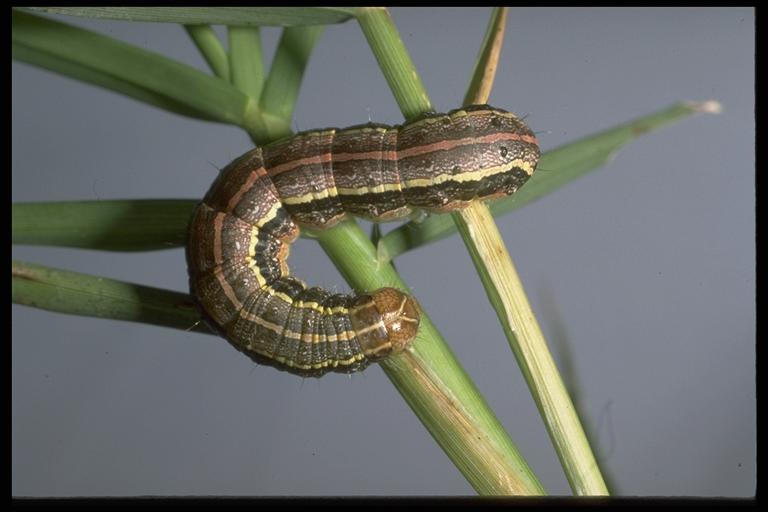
Fall armyworm larvae vary in color from green to brown and often have distinct longitudinal stripes. A key identifying feature is the inverted white “Y” marking on the head capsule, which helps distinguish them from other caterpillar pests.
Scouting and Monitoring: The Most Important Tool
Consistent scouting is the foundation of effective armyworm management. During peak risk periods—typically July through October—fields should be inspected at least once per week, and more frequently when conditions favor outbreaks.
A strong scouting routine should include:
- Walking multiple areas of each field (not just edges)
- Parting forage canopy to inspect near the soil surface
- Checking for larvae using a square-foot sampling method
- Estimating larval size and density across the field
- Recording damage progression over time
Small larvae are significantly easier to control than larger ones. Early detection directly improves treatment success and reduces economic loss. Once larvae reach larger stages, even effective insecticides may not prevent continued feeding damage for a short period after application.
When Armyworm Populations Become a Problem
Economic thresholds vary depending on forage type, field conditions, and intended use (grazing, hay production, or wildlife food plots). However, treatment is generally considered when:
- Larval populations are high enough to threaten stand survival
- Active feeding damage is visible and expanding
- Small larvae are present in increasing numbers across multiple sampling points
Because armyworms can defoliate fields very quickly, delayed decisions often result in irreversible damage before control measures take effect.
Chemical Control Options
When scouting indicates populations have exceeded acceptable levels, insecticide applications may be necessary. Commonly used active ingredients for armyworm control in Mississippi forage systems include:
- Lambda-cyhalothrin
- Bifenthrin
- Zeta-cypermethrin
- Chlorantraniliprole
- Spinosad
Product selection should be based on:
- Crop or forage species being treated
- Larval size and infestation severity
- Grazing or harvest restrictions
- Pre-harvest intervals (PHIs)
- Label requirements and guidance
Applications are most effective when targeting small larvae early in an outbreak. Larger caterpillars are more difficult to control and may continue feeding even after treatment.
Resistance Management and Long-Term Control
Repeated use of the same insecticide mode of action can lead to resistance development in armyworm populations. To maintain long-term effectiveness:
- Rotate insecticides with different modes of action
- Avoid repeated back-to-back applications of the same chemical class
- Follow all label restrictions carefully
- Use insecticides only when scouting confirms need
- Integrate chemical control with cultural and monitoring practices
Integrated pest management reduces dependence on chemical control and helps preserve effectiveness over time.
Integrated Pest Management (IPM) Strategies
Chemical control is only one component of a broader management system. A strong IPM approach includes:
- Regular scouting and early detection
- Maintaining field records of infestations and treatments
- Managing forage growth to reduce uniform attraction of egg-laying moths
- Avoiding unnecessary insecticide applications
- Coordinating treatment timing based on larval development stages
While lush, high-quality forage is desirable for wildlife food plots, it can also create ideal conditions for armyworm outbreaks. Vigilance during periods of rapid growth is essential.
Summary
Armyworm management in Mississippi begins with awareness and consistent monitoring. These pests can rapidly shift from low-level populations to devastating outbreaks capable of destroying forage in just a few days.
Landowners and managers who:
- Scout frequently during peak risk periods
- Identify larvae early
- Apply treatments only when necessary
- Rotate insecticide classes responsibly
- Follow integrated pest management principles
are best positioned to reduce damage and protect forage resources.
By combining careful observation with timely, informed decisions guided by Mississippi State University Extension Service recommendations, Mississippi land managers can significantly reduce the risk and impact of armyworm outbreaks in food plots, pastures, and hayfields.
For more wildlife management information, visit