
Written by: Pierce Young
Every deer camp has likely heard this saying before:
“Once a spike, always a spike.”
The idea was simple. If you see a buck with spikes for antlers, he supposedly has poor antler genetics and will always be a spike. Under this line of thinking, shooting a yearling spike is a way to remove inferior genetics from the herd and make room for bucks with greater antler potential.
It sounds logical.
But deer management isn't about what sounds logical. It is about what the data show.
And research has demonstrated that a spike is not destined to remain a spike.
The biggest reason is that most yearling (1.5-year-old) bucks will like be spikes when they grow their first set of antlers.
That first set of antlers is produced while the deer is still very young. Body size, nutrition, date of birth, health, environmental conditions and genetics can all influence antler development.
In other words, the first set of antlers is a snapshot of a young deer—not a permanent description of what that deer will become.
That distinction is at the heart of the myth.
The study that challenged the myth
One of the most important studies examining this question was conducted in South Texas.
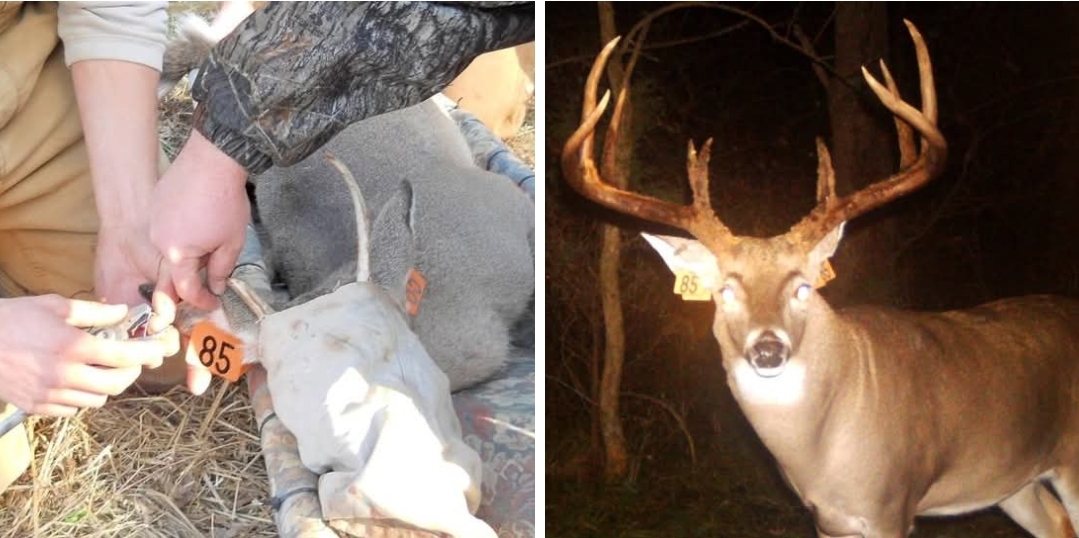
The researchers individually captured, aged, measured and marked wild bucks so they could follow their development through time. The bucks were individually identified, their antlers and body measurements were recorded, and researchers recaptured them when possible or obtained final measurements after harvest.
The answer was not what the “once a spike, always a spike” theory would predict.
They found that whether a deer had spiked or forked antlers during a buck's first year was a poor predictor of antler development at maturity.
The researchers concluded that culling yearling bucks based on the number of antler points would have little positive effect on overall future antler quality.
A buck could start out with spikes and still develop substantially into a larger-than-average buck as he matured.
More research took it a step further
Their findings provide an important middle ground.
They found that antler size increased as bucks aged, with antler size continuing to increase until approximately 5 years of age.
They also found a positive relationship between yearling antler size and antler size at older ages.
So, yes—early antler development contains some information about future antler development.
It does not mean that every spike will become a mature buck with spikes.
It means that the amount of antler, or the size of the spikes and/or forks, when a buck is young will on-average explain how he compares to other bucks when he is mature.
And that distinction is critical.
A 1.5-year-old buck is nowhere near his maximum body size or antler development.
Antlers are not finished products.
They are regenerated every year and generally increase in size as bucks mature.
There is a lot of development still ahead of him.
Nutrition matters
Antler development is strongly influenced by the resources available to a growing deer.
A young buck experiencing poor nutrition is not necessarily revealing his genetic potential.
He may simply be expressing what his environment allows him to express.
Another research study reported that the occurrence of spike antlers among yearlings was associated with birth timing, with later-born bucks more likely to exhibit spike antlers.
That makes biological sense.
A late-born buck will often be born into harsher late-summer conditions.
A spike isn't necessarily a genetic problem
This is another major misunderstanding.
People often say:
“Shoot the spike because you need to remove those bad genes.”
But antler development is influenced by much more than genetics.
And genetics isn't simply a matter of the buck's antlers or his father's genetics. Half of his genetic contribution comes from his mother.
Therefore, even if you could accurately identify a genetically inferior buck based on his antlers shooting that buck would not improve the genetics of the herd.
In free-ranging populations, genetics, nutrition, age structure, habitat quality, recruitment, mortality and environmental conditions all interact to form the end product of antlers on a buck's head.
The management lesson
So should you ever shoot a spike?
Sure—if harvesting that deer fits your management objectives.
A spike is a perfectly legitimate deer to harvest.
If the goal is to put meat in the freezer, a spike can accomplish that.
If the goal is to reduce the number of bucks in an overpopulated herd, harvesting a spike—specifically a smaller sized spike—may accomplish that.
If a management program has specific criteria for harvesting young bucks, a spike may meet those criteria.
But that's very different from saying:
“We need to kill this deer because he will always be a spike.”
or
“This buck will never be a trophy buck because he's only a spike.”
The research doesn't support that statement.
What should managers do instead?
If your goal is to improve deer quality, focus on things you can actually influence.
Manage the habitat.
Good habitat provides deer with the nutrition necessary to express their genetic potential.
Manage deer density.
Too many deer competing for limited resources can reduce the nutritional plane available to every deer on the property.
Protect the best young bucks in each age class.
Allowing bucks to reach older age classes gives them the opportunity to express more of their antler potential.
Evaluate deer by age, not just antlers.
Age dramatically changes how we should interpret antler size.
The bottom line
Don't manage a buck based solely on if he has spiked antlers or not.
For more wildlife management information visit: