
Written by: Kevin Owens
Edits by: Pierce Young
Food plots are one of the most popular tools used by Mississippi landowners to improve wildlife habitat and provide supplemental forage for white-tailed deer. But simply planting a food plot does not tell you how much forage the deer are actually consuming.
One of the simplest ways to measure deer use is by placing an exclusion cage in your food plots.
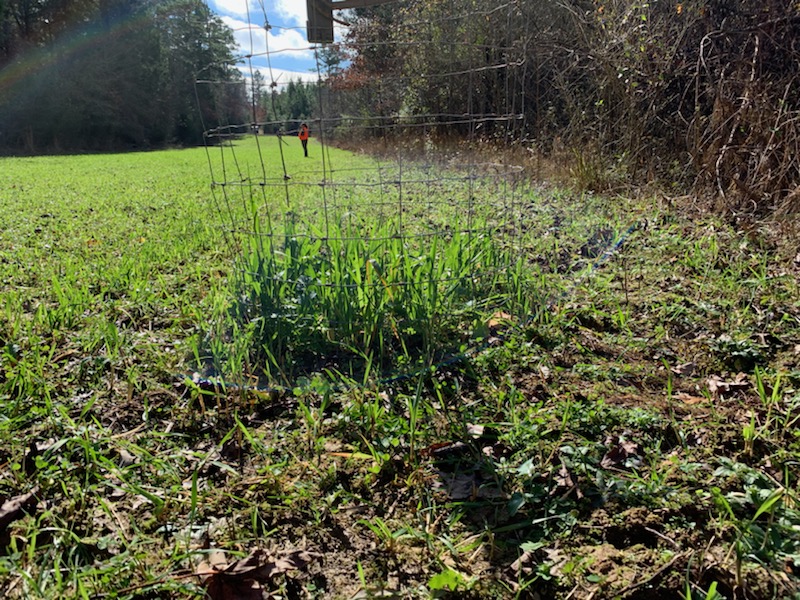
What Is an Exclusion Cage?
An exclusion cage is a small, fenced structure placed over a portion of a food plot after planting to keep deer from eating the plants inside. By comparing the vegetation inside the cage with the vegetation outside it, landowners can see how much of the forage is being consumed by deer.
This simple tool can provide valuable information about deer density, forage availability, whether a food plot is keeping up with demand, or whether there was some problem when planting.
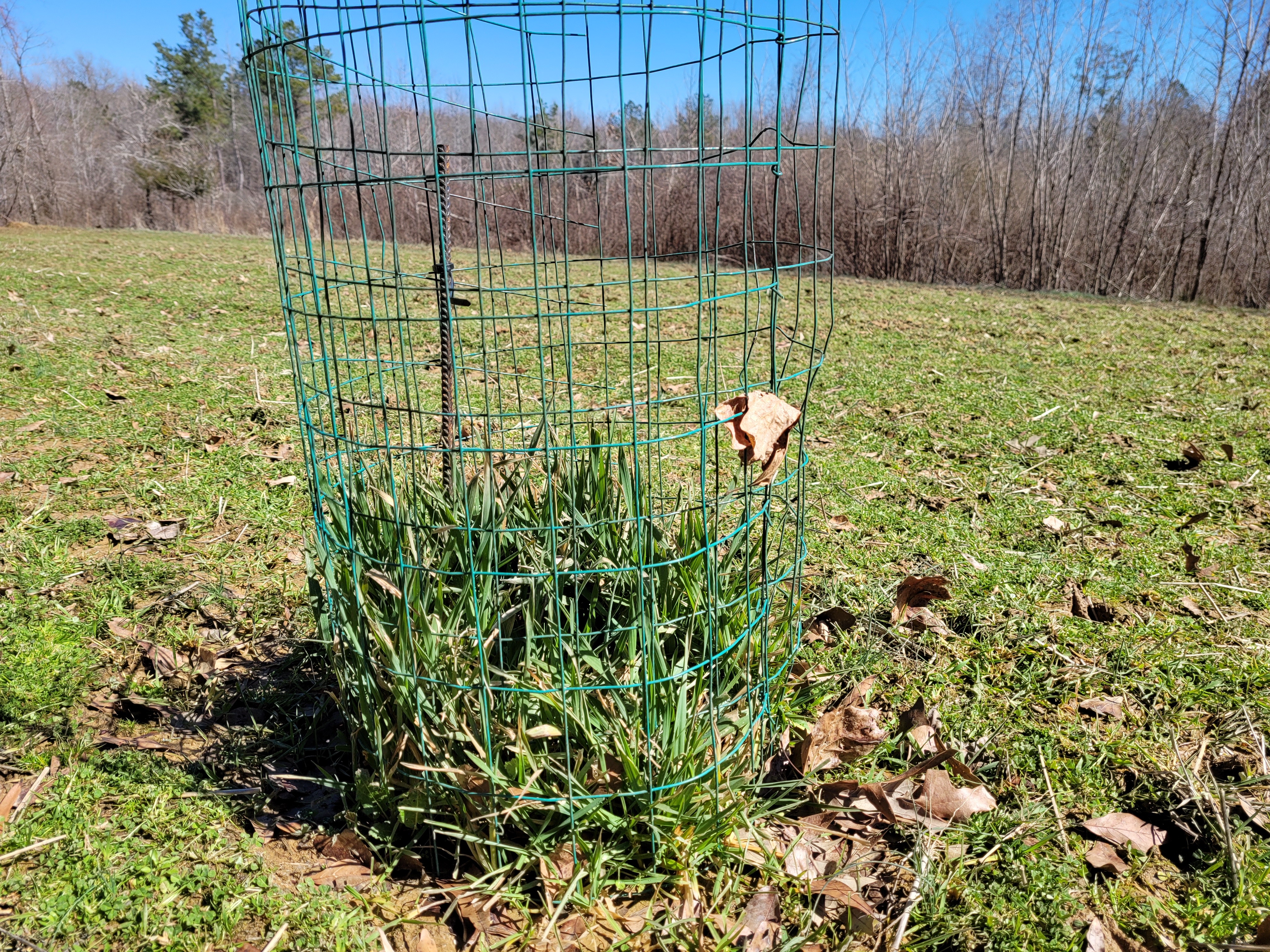
The cage should be large enough to provide a meaningful comparison between protected and unprotected vegetation but small enough to be inexpensive and easy to move or maintain. A common minimum size is 3 feet in diameter and 4 feet tall.
A common approach is to construct a cage from wire fencing supported by stakes. The openings need to be small enough and the structure tall enough that deer cannot reach over or through the fence to browse the vegetation. Wire fencing with 1x2-inch openings will ensure both deer and rabbits will be excluded from eating the spot.
How to Use an Exclusion Cage
Place the cage in a representative section of the food plot. Avoid putting it in an unusually poor or unusually productive area. The goal is to select a location that represents the overall condition of the plot. Hunters often place exclusion cages certain distances to mark shooting distance from a stand.
Once the cage is installed, periodically compare the vegetation inside and outside the structure.
Look for differences in:
- Plant height
- Plant density
- Leaf production
- Plant maturity
- Amount of exposed soil
- Overall forage volume
- Species composition
Taking photographs each month from the same location each time can make changes easier to document. A photograph taken when the cage is installed and additional photographs taken several weeks later can provide an excellent visual record. Having a trail camera setup with the exclusion cage in the frame will help with observations.
Inside and Outside of the Exclusion Cage
What Does a Big Difference Mean?
A substantial difference between the vegetation inside and outside the cage generally indicates that deer are consuming a significant amount of the forage.
For example, imagine that vegetation inside the cage is 12 inches tall while plants outside the cage are only 4 inches tall.
That means the food plot was planted correctly. Deer simply are consuming the new growth as quickly as the plants produce it. If this difference remains large over time, it is a strong indication that deer use is affecting the amount of forage available.
What If There Is Little Difference?
If the vegetation inside and outside the cage looks similar, deer are not consuming enough forage to create a noticeable difference.
That could mean several things:
- Deer numbers are relatively low.
- Deer have abundant alternative food sources nearby.
- The plot is not particularly attractive to deer.
- Weather or poor growing conditions are limiting plant growth.
A lack of difference does not automatically mean the deer population is low. It simply means that deer browsing may not be the primary factor limiting forage production at that particular time.
If the food plot is not being productive inside or outside of the cage there was likely a planting issue. This could be due to:
- Soil fertility and nutrients available
- Soil pH
- Moisture
- Planting technique
- Seed quality
A Simple Tool with a Big Payoff
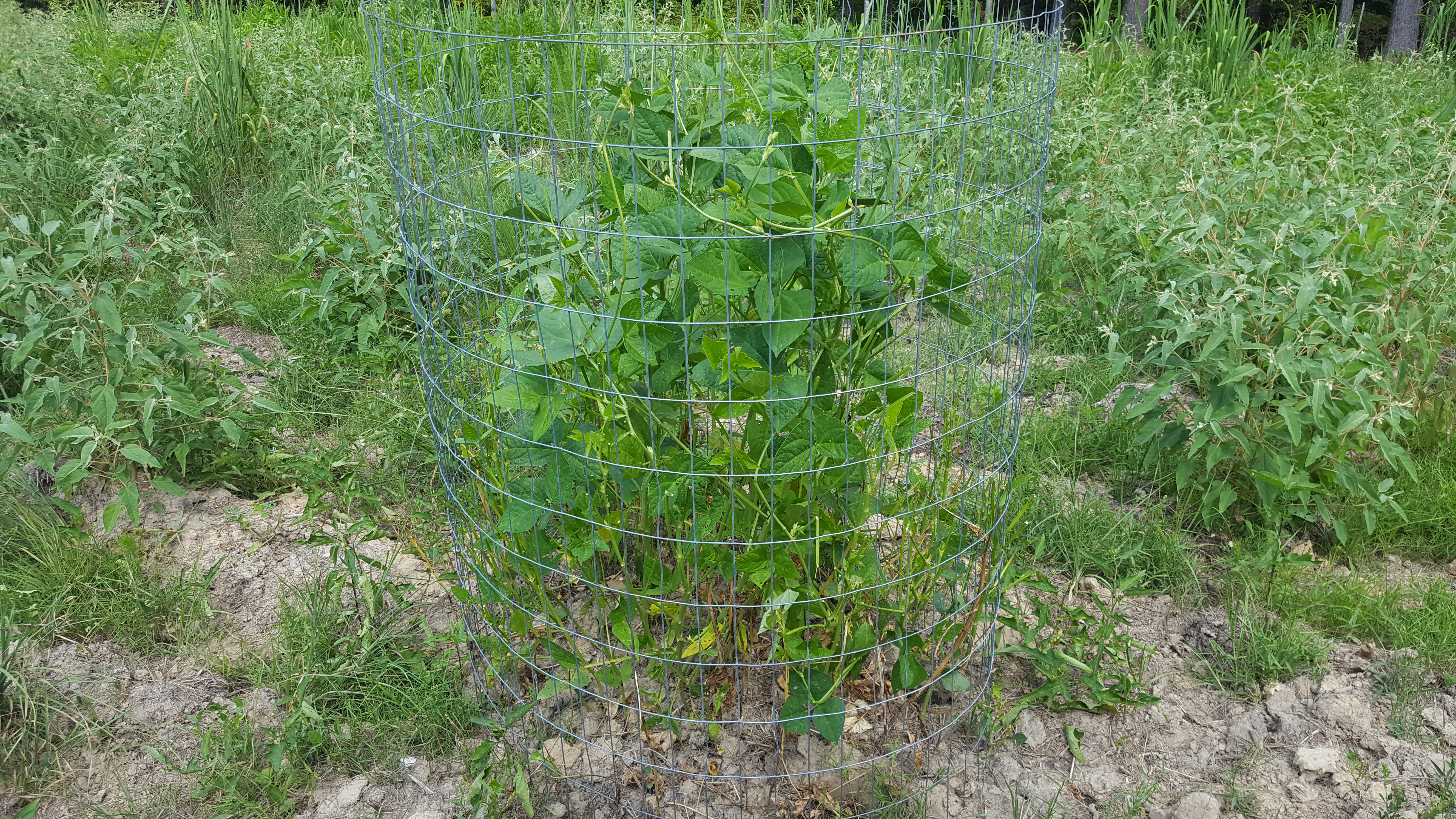
Exclusion cages are inexpensive, easy to construct, and provide something that is often missing from wildlife management: a direct visual comparison. Instead of guessing, landowners can see the difference between vegetation that deer can access and vegetation that is protected from them.
For Mississippi landowners managing food plots for deer, turkey, and other wildlife, this simple tool can become part of an annual habitat-monitoring program.
Install the cages, photograph them throughout the growing season, and keep notes on what you see. Over several years, those observations can help reveal trends in deer use and habitat condition.
Final Thoughts
A food plot is more than a place to attract deer. It is also an opportunity to monitor how deer are interacting with the habitat. An exclusion cage provides a simple way to measure that interaction.
The goal isn't simply to grow more food or have more deer. The goal is to maintain a productive food plot, healthy deer, and healthy habitat at the same time.
For more wildlife management information visit: