Written by: Kevin Owens
Edits by: Pierce Young
When landowners talk about managing timber for wildlife, terms such as thinning, canopy cover, timber density, stand structure, and forest regeneration come up frequently. One of the most useful measurements for describing the density of trees within a forest stand is basal area (square footage of tree at chest height across an acre).
Basal area is a forestry measurement, but it is also an important wildlife-management tool. It helps landowners understand how dense a stand is and, more importantly, how that density can influence the amount of sunlight reaching the forest floor.
For wildlife, that sunlight can make a tremendous difference. More sunlight reaching the ground generally means greater potential for grasses, forbs, legumes, shrubs, vines, and other plants to grow. Those plants provide food and cover for deer, turkey, quail, rabbits, pollinators, and many other species.
What Is Basal Area?
Basal area (BA) is the cross-sectional area of a tree's trunk measured at approximately 4.5 feet above the ground, commonly referred to as diameter at breast height (DBH). It is normally expressed as square feet per acre when describing a forest stand.
In simple terms, basal area tells us how much of an acre would be covered if every tree trunk were cut at chest height and all those trunks were added together.
For example, a forest stand with a basal area of 100 BA (square feet per acre) has more tree stem area occupying that acre than a stand with a basal area of 60 BA (square feet per acre).
Importantly, basal area is not the same thing as the number of trees per acre. A stand could contain many small trees and have a relatively high basal area, while another stand could contain fewer but much larger trees and have the exact same basal area.
Why Measure Basal Area?
Basal area provides landowners and foresters with a standardized way to describe timber density. Instead of simply saying that a forest "looks thick," a manager can measure the stand and determine its approximate basal area.
That information can then be used when making decisions about:
- Timber thinning
- Wildlife habitat management
- Forest regeneration
- Prescribed burning
- Deer habitat
- Turkey habitat
- Quail habitat
- Timber production
- Creating wildlife openings
- Managing pine plantations
- Improving understory vegetation
For wildlife management, one of the most important questions is: How much sunlight is reaching the forest floor? Basal area can help answer that question indirectly.
Basal Area and Sunlight
Trees compete for sunlight, water, and nutrients. As stands develop and tree crowns expand, the forest canopy generally becomes more closed. Less sunlight reaches the ground, and the understory can become increasingly shaded. This can have major consequences for wildlife.
A heavily shaded forest floor often produces less of the vegetation that deer and other wildlife depend on. Grasses, forbs, legumes, shrubs, and other plants may become less abundant.
When basal area is reduced through appropriate thinning, more sunlight can reach the forest floor. That additional sunlight can stimulate understory growth and increase the amount of available forage and cover.
This is one reason timber thinning can be such a powerful wildlife-management tool.
How Is Basal Area Measured?
Foresters commonly use a tool called a basal area prism or an angle gauge to estimate basal area. These tools allow a person to stand at a fixed point and evaluate surrounding trees. Depending on the instrument and method used, trees that fall within the appropriate angle are counted toward the basal-area estimate.
More detailed measurements can also be made using tree diameter measurements and calculations.
For most landowners, however, hiring a professional forester or wildlife consultant can provide a more accurate stand assessment, particularly when a timber sale or major habitat-management project is being considered.
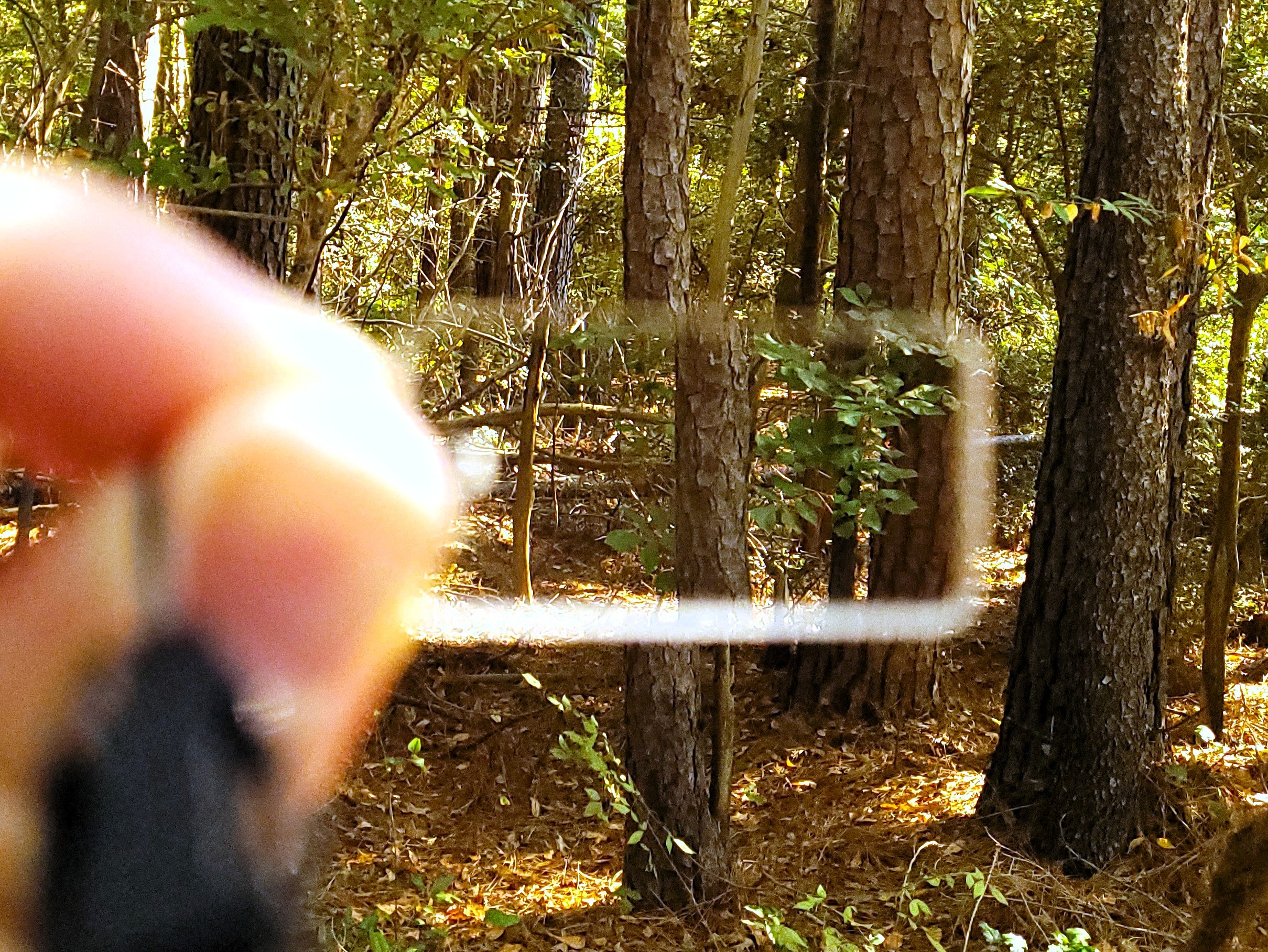
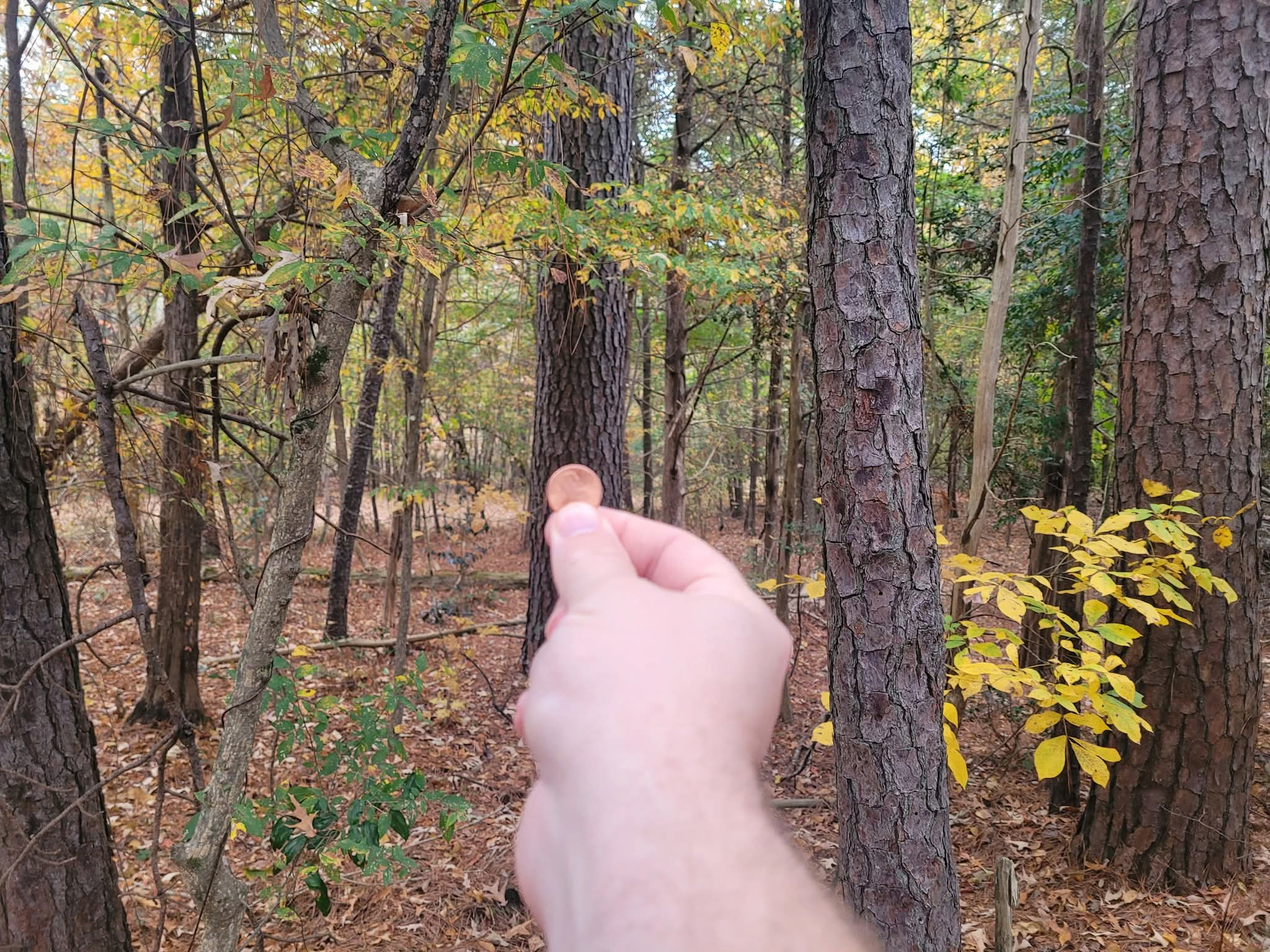
A quick, less accurate method, is using a penny. Hold the penny at arm's length, rotate in a circle, count any tree wider than the penny in your view. Each tree roughly equals 10 sqft of basal area, so multiple your tree count x10 to get a rough basal area measurement.
Regardless if you use a professional method or the quick penny method, multiple sampling points distributed throughout a stand are generally needed to develop a representative stand-level estimate.
Think About Basal Area as a Wildlife Management Dial
One useful way to think about basal area is as a management dial. As basal area increases, the forest generally becomes more shaded and closed. As basal area decreases, more sunlight can reach the ground.
That means managers can manipulate stand density to influence understory vegetation. Generally, many of the plants most beneficial to animals such as deer, wild turkeys, quail, and many other wildlife species are more "sun-loving" plants.
Managers can use thinning, prescribed fire, timber harvests, and other techniques to create a mosaic of more diverse habitat conditions across the property. Some areas can remain heavily forested while others are opened enough to produce abundant understory vegetation.
That diversity is more valuable to wildlife than if the entire property looked the same.
Basal Area and White-Tailed Deer
White-tailed deer need a combination of food, cover, water, and space. Much of the food deer consume comes from plants growing in the understory and along forest edges such as woody browse plants and forbs.
A dense forest with little sunlight reaching the ground will have relatively little high-quality deer forage. Thinning can change that.
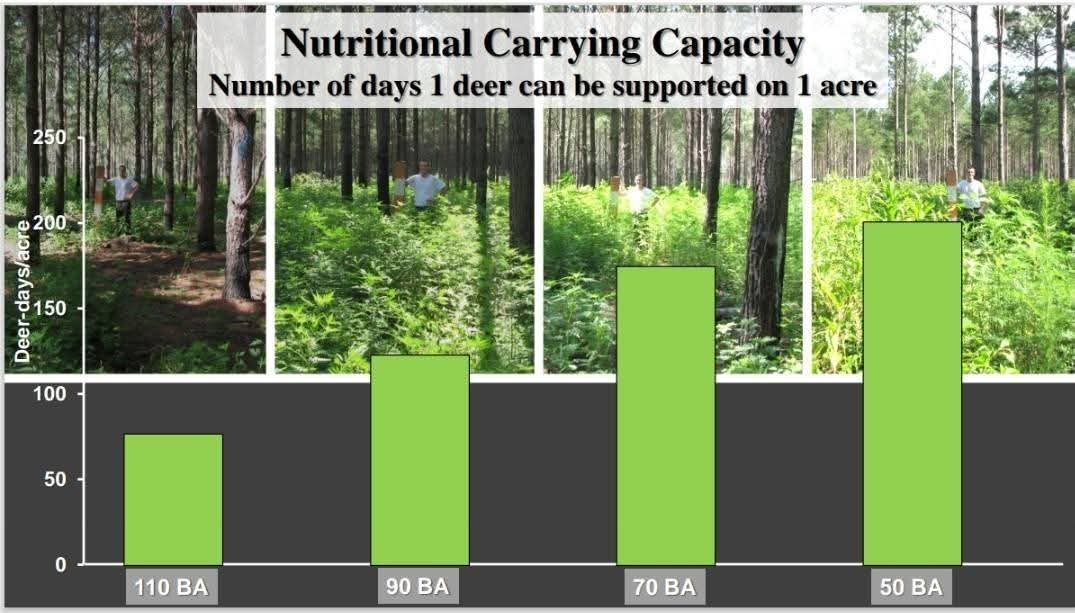
For white-tailed deer, thinning to under a 70 BA produces more forage and the lower the basal area the more forage that is produced.
Examples of deer forage production from different timber stand categories:
- Unthinned forest = 50-100 lbs/acre/year
- Thinned forest = 400-800 lbs/acre/year
- Heavily thinned or clearcut forest = 1000-1800 lbs/acre/year
When enough trees are removed to open the canopy, sunlight reaches the forest floor and stimulates the growth of desirable plants.
Deer are concentrate selectors that generally favor highly digestible plant parts, particularly forbs, legumes, and tender woody browse, rather than mature grasses.
Increasing the abundance of these preferred plants can improve natural forage availability, potentially increasing the nutritional carrying capacity of the habitat.
The results of a thinning to improve habitat depend on the intensity of thinning, site quality, existing vegetation, timber species, season, and how the stand is managed afterward.
Heavy deer browsing pressure, invasive plants, and competing woody vegetation can also limit the benefits of increased sunlight.
Basal Area and Turkey
Wild turkeys also benefit from appropriately managed forest stands. Turkeys need a mixture of mature closed canopy trees, thick herbaceous nesting cover, and brood-rearing habitat with bug attracting forbs.
A closed forest canopy can limit the amount of herbaceous vegetation growing at ground level. Reducing basal area in selected areas can allow more sunlight to reach the forest floor and encourage the growth of grasses and broadleaf plants that can provide cover for nesting and support invertebrate populations, which are particularly important to turkey poults during their early weeks of life.
In order to provide the vegetation ideal for the plants wild turkeys need, basal areas should be less than a 60 BA.
Basal Area and Quail
Bobwhite quail require the opposite vegetation structure from a closed-canopy forest. Quail generally benefit from open, grassland conditions with abundant forbs, legumes, a few shrubs, some native bunch grasses, and low-growing cover. This generally means low basal areas less than 40 BA.
Strategic thinning can help create more open conditions and increase sunlight penetration. However, simply reducing basal area is not enough. Quail habitat requires the right combination of nesting cover, brood habitat, escape cover, bare ground, and food-producing plants. Timber thinning is only the first step. Other management practices such as prescribed fire and herbicide applications are necessary to maintain the proper vegetation structure for quail.
The objective is to create the appropriate structure, not simply reach a particular basal-area number.
Basal Area and Forest Regeneration
Basal area also plays an important role in forest regeneration. Young trees need adequate sunlight and growing space to become established. If the overstory is extremely dense, seedlings and saplings may struggle to grow.
Reducing basal area can increase light availability and growing space. But there must be a balance.
Too little canopy can create conditions that favor certain plants while reducing others. Too much canopy can suppress understory vegetation and regeneration.
Wildlife managers therefore need to consider the entire stand rather than focusing on one number.
If forest regeneration is the goal, working with a registered professional forester is especially important for developing an appropriate regeneration strategy.
Basal Area Is Not a "Magic Number"
One of the most important things to understand about basal area is that there is no single ideal basal-area number for every wildlife property.
A target appropriate for a pine stand managed primarily for timber may not be appropriate for a hardwood stand being managed for deer. Likewise, the ideal structure for quail may differ from what is desirable for deer or turkey.
Site quality matters as well. A productive soil can support more vegetation than a poor site under similar conditions. Rainfall, tree species, stand age, topography, previous management, and competing vegetation all influence how a stand responds to thinning.
Rather than asking, "What basal area should I have?" landowners should ask: "What habitat structure am I trying to create, and what basal area will help me achieve it?"
Developing a general management plan and adjusting that plan as vegetation responds to management is the key to achieving the desired habitat conditions.
Basal Area and Fire
Basal area and prescribed fire can work together particularly well. Thinning allows more sunlight to reach the ground. Prescribed fire can then be used to reduce accumulated leaf litter, stimulate fire adapted vegetation, control undesirable woody vegetation, and maintain open forest conditions.
Instead of a shaded forest floor dominated by leaf litter and shade-tolerant plants, the stand can develop a more diverse layer of grasses, forbs, shrubs, and other vegetation. This can improve habitat for deer, turkey, quail, and numerous other wildlife species.
Thinning and prescribed fire can also improve conditions for future prescribed burns by encouraging the growth of grasses and other fine fuels, potentially increasing fuel continuity and supporting more consistent fire spread.
Final Thoughts
Basal area may sound like a technical forestry term, but its wildlife-management implications are straightforward. Basal area is a measure of tree across an acre.
For wildlife managers, the important connection is that tree density can influence canopy closure and sunlight reaching the forest floor, which in turn affects understory vegetation. By measuring and managing basal area, landowners can make more informed decisions about thinning and forest management.
Basal area should not be treated as a magic number. The best target depends on the species being managed, site conditions, timber objectives, and the habitat structure the landowner wants to create.
For Mississippi landowners, the ultimate goal should be to use basal area as one part of a larger habitat-management strategy—one that creates a diverse mixture of food, cover, sunlight, regeneration, and forest structure across the property.
For wildlife, a well-managed forest provides the right combination of trees and open space to produce the vegetation and habitat those animals need.
To view wildlife management information, visit: