Written by: Pierce Young
One of the most important—but often overlooked—concepts in deer management is carrying capacity.
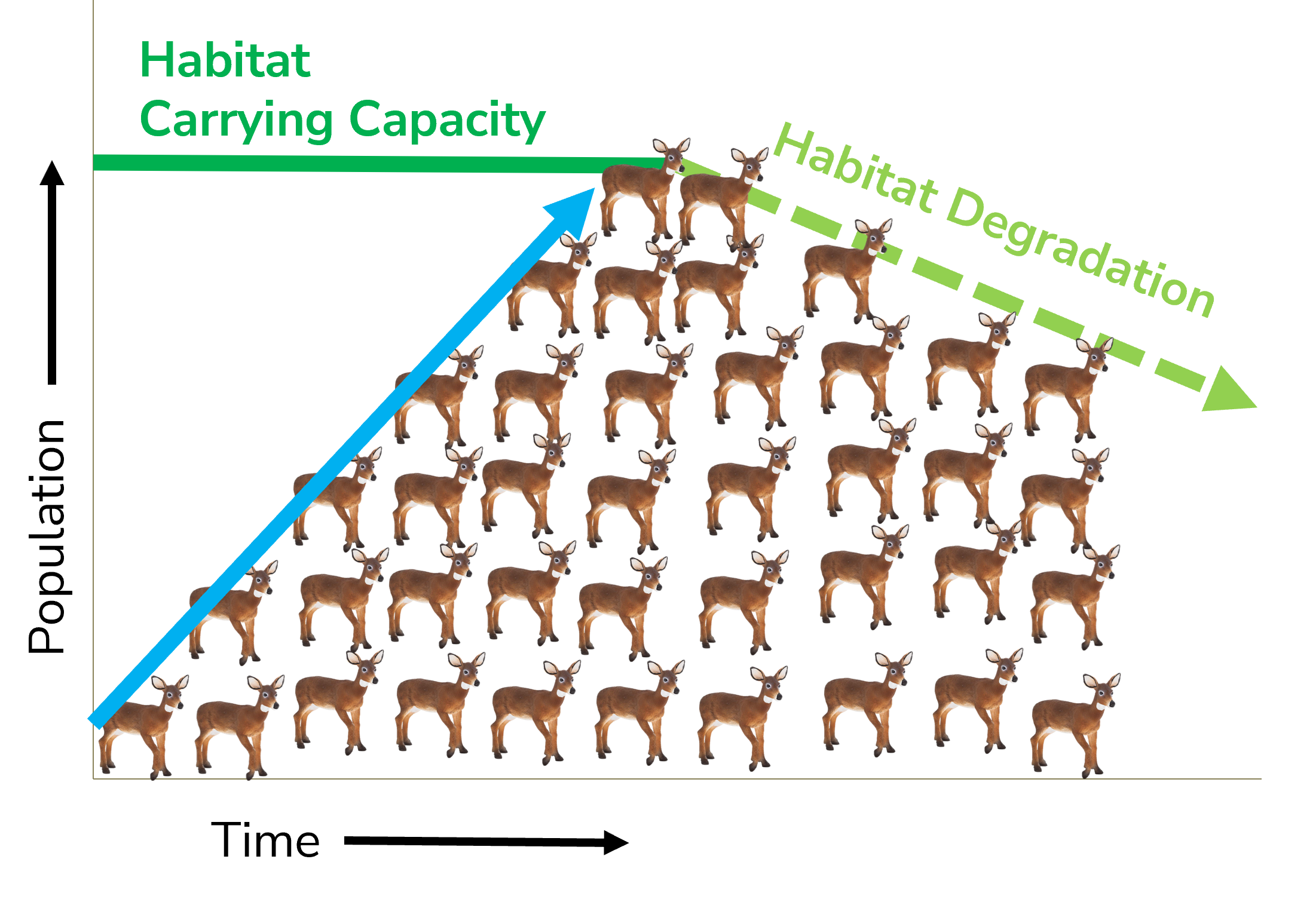
Simply put, carrying capacity is the number of deer a property can support over time without degrading the habitat that supports them.
And importantly, carrying capacity isn't a fixed number. It changes with rainfall, drought, timber conditions, plant growth, habitat management, and other environmental factors.
What Happens When Carrying Capacity Is Exceeded?
1️⃣ Habitat Degradation
Too many deer can lead to over-browsing, where deer repeatedly consume the most nutritious and desirable plants. Over time, preferred plants decline, plant diversity can decrease, and forest regeneration can suffer.
The property may still have green plants, but only those that are not-preferred by deer and do not provide much nutritional value.
A property can eventually become less productive for deer—and other wildlife.
Not only will animal populations decline, but habitat degradation will cause the carrying capacity to become lower, further reducing the number of animals the land can support.
The idea that if you simply don't harvest any more deer the population will go up doesn't work if the population is already at carrying capacity. Over time you may end up with less deer overall by harvesting less deer, as habitat degrades and carrying capacity declines.
2️⃣ Declining Deer Health
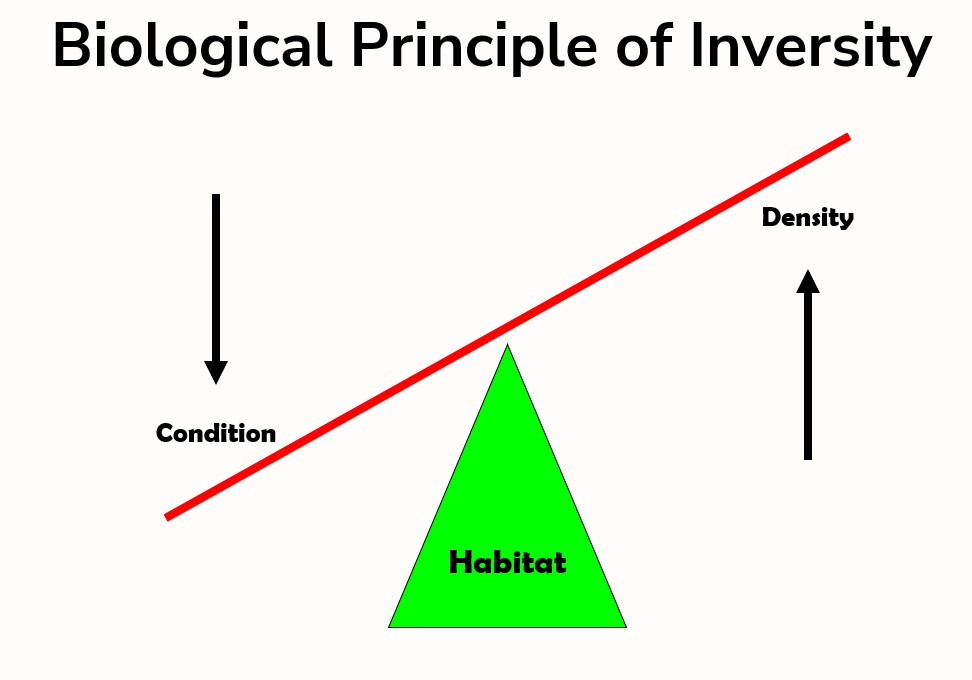
When too many deer compete for limited high-quality forage, nutrition suffers, particularly during stressful periods when food is naturally limited such as late-Winter or late-Summer. Over time, and over generations, deer populations will adapt to the poorer conditions by becoming smaller and less productive.
3️⃣ Lower Reproductive Success
Poor nutrition can reduce reproductive performance, resulting in fewer successful pregnancies, fewer or less-healthy fawns, and lower fawn survival. Reproduction and recruitment will become stagnant. Cover which acts as protection against predation is also usually very limited in these situations, which will further reduce herd numbers.
4️⃣ Reduced Antler Growth within the Population
Genetics determine a buck's potential, but nutrition determines how much of that potential he can express. Even genetically superior bucks cannot show their full genetic antler potential without his mother living with adequate nutrition. When habitat suffers, so does antler quality.
Not All Acres Are Equal
Two properties can be the same size but have very different carrying capacities.
A property with:
- Diverse forest conditions
- Prescribed fire
- Timber thinning
- Native forbs and browse
- Young forest habitat
- Openings
- Well-managed food plots
may produce much more deer forage than a property dominated by mature, closed-canopy forest, with very few plants in the understory.
That's why there is no universal number that works for every property.
A certain amount of deer might be appropriate on one property and be too many on another.
Carrying Capacity Is a Moving Target
A drought, flood, or other environmental change could temporarily reduce the amount of food available.
Maintaining deer numbers below carrying capacity provides a buffer against those changes.
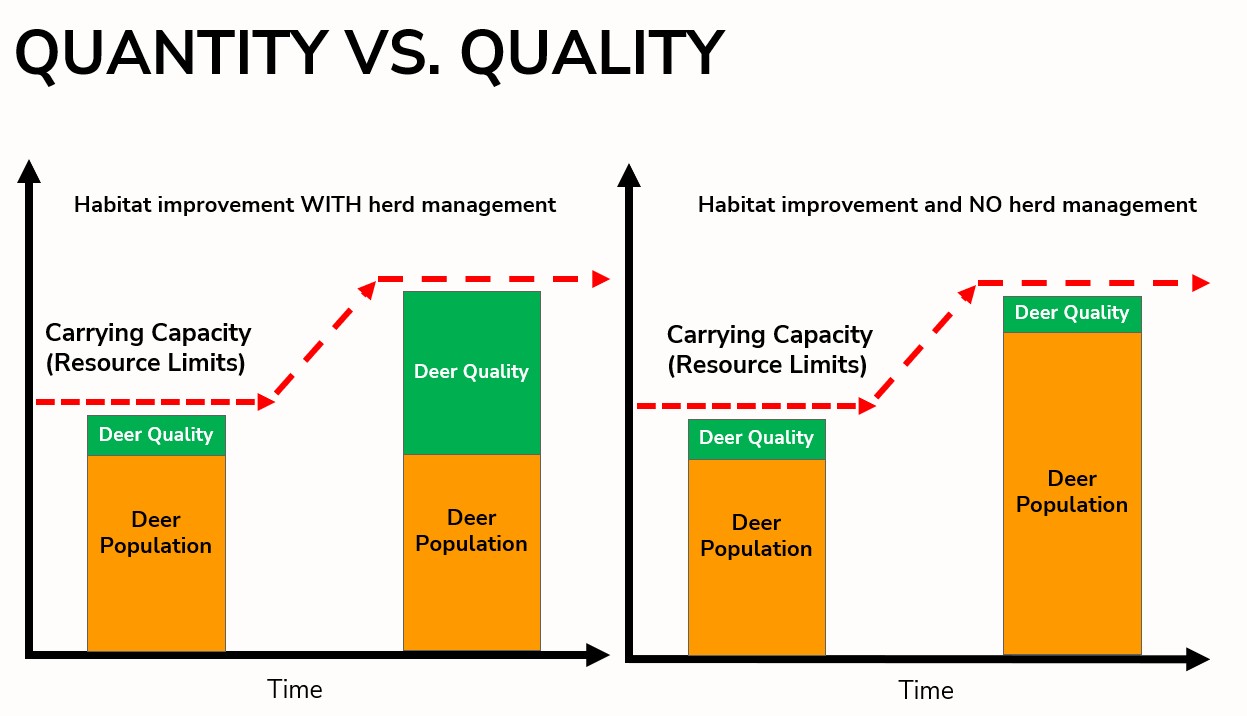
Even if carrying capacity is increased, if harvest numbers do not adequately keep the population lower, quality of deer body weights and antler potential will still be suppressed.
How Can We Improve Carrying Capacity?
Landowners can increase the amount and quality of forage available through:
🌿 Habitat management – Maintaining diverse vegetation provides food and cover throughout the year. Timber management, prescribed fire, and native field work improve forage and cover.
🦌 Harvest management – Appropriate harvest, particularly doe harvest when populations are too high, helps keep deer numbers in balance with available resources.
🌾 Food plots – Provide additional high-quality forage and help fill seasonal gaps, but they should supplement—not replace—good native habitat.
🤝 People management – Cooperation among landowners and neighboring properties is often necessary because deer don't recognize property boundaries.
The Bottom Line
Carrying capacity can't determined by acreage alone.
It's the relationship between how many deer are using the property and how much quality food and cover the habitat can produce.
Too many deer can degrade the habitat, which can ultimately reduce the habitat's ability to support deer.
Better habitat can increase carrying capacity, but population management is still necessary to keep deer numbers in balance with what the land can sustainably provide.
The goal shouldn't be to have as many deer as possible.
The goal is to have as many deer as the habitat can sustainably support while keeping both the herd and the habitat healthy.
Healthy habitat supports healthy deer.
For more information about wildlife management visit: