
Written by: Pierce Young
(The Mississippi's White-tailed Deer Peak Breeding Dates Map is toward the bottom of this page)
The white-tailed deer rut is one of the most anticipated periods of the hunting season. Each year, hunters look forward to increased buck movement, chasing activity, and the possibility of encountering mature bucks that are otherwise rarely seen during daylight hours.
However, the rut is often misunderstood. Many hunters think of the rut as a relatively short period when bucks are chasing does, breeding activity is at its highest, and deer are most visible during daylight hours. In reality, the rut is a much longer biological process involving changes in hormone levels, behavior, movement, social interactions, and reproductive activity.
Understanding these changes can help hunters better interpret deer behavior, improve hunting strategies, and make more informed wildlife management decisions.
Research from Mississippi State University indicates that, in Mississippi populations, the broader breeding season commonly lasts approximately 30–45 days, with much of the breeding concentrated within a 14-day period surrounding the peak breeding date.
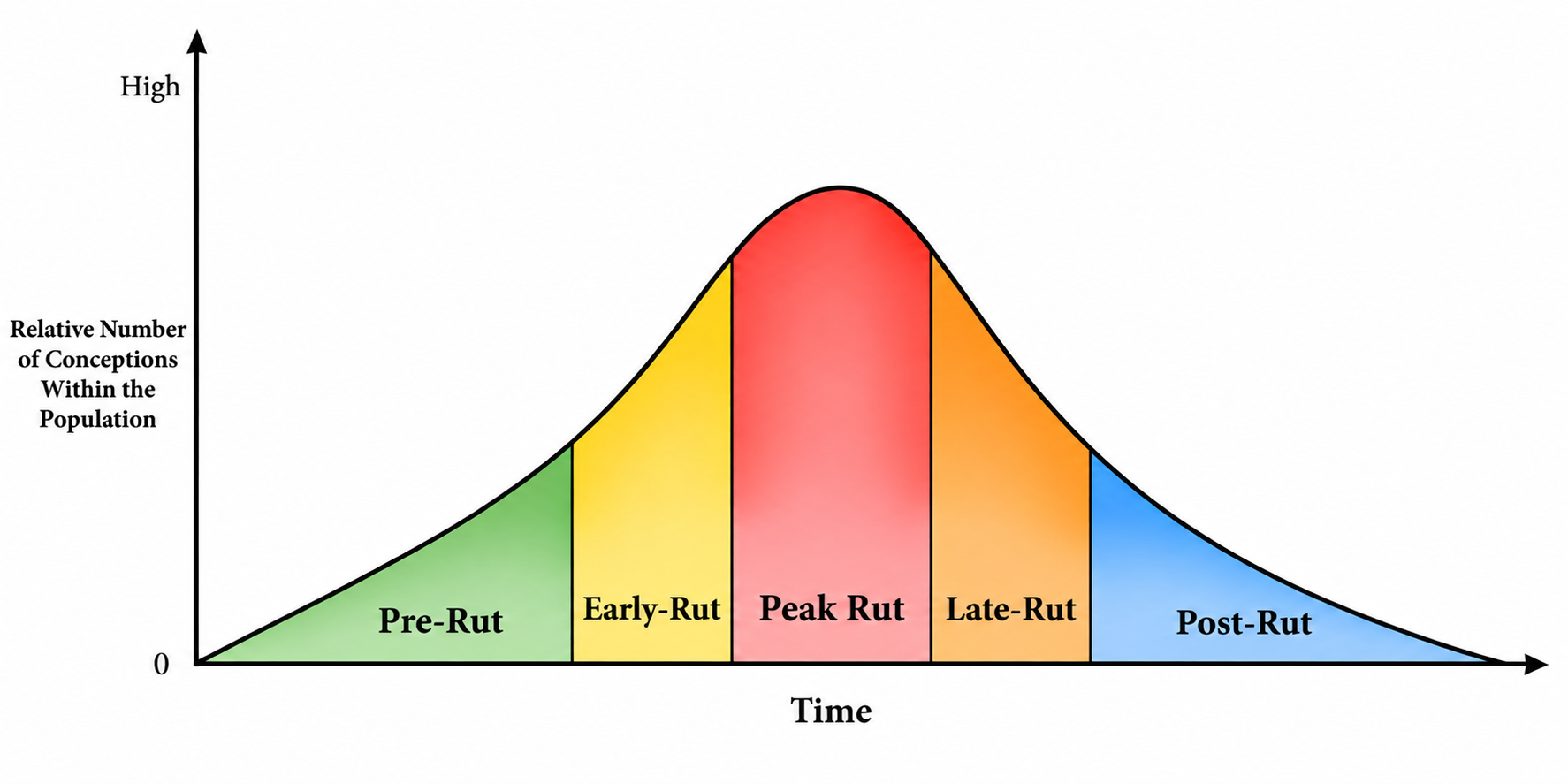
Although the rut is a continuous process rather than a series of clearly separated events, it can be divided into five general phases: Pre-Rut, Early-Rut, Peak-Rut, Late-Rut, and Post-Rut.
These periods provide a useful framework for understanding how rut activity generally progresses within a deer population. However, the exact duration of each phase varies, and individual deer do not necessarily follow this schedule.
Most importantly, peak rut should be understood as the period of greatest conception activity, not necessarily the period when hunters observe the most buck movement.
What Causes the Rut?
The white-tailed deer breeding season is primarily controlled by changes in day length, also known as photoperiod.
As daylight hours decrease during the fall, changes in melatonin secretion influence the reproductive endocrine system. In bucks, these changes contribute to increased testosterone production, sperm production, and the development of breeding behaviors. In does, hormonal changes regulate reproductive cycling and the timing of estrus.
Testosterone levels in bucks generally begin increasing before the breeding season, contributing to several recognizable behavioral changes, including increased rubbing, scraping, sparring, aggression, and interest in does.
However, an important distinction exists between the timing of the breeding season and the behavioral intensity observed during that season.
While photoperiod is the primary environmental cue regulating seasonal reproduction, the actual timing of conception is influenced by genetics, latitude, age, nutritional condition, and other population-specific factors.
This is particularly important in the southeastern United States, where the timing of the rut can vary dramatically between regions and even between nearby deer populations.
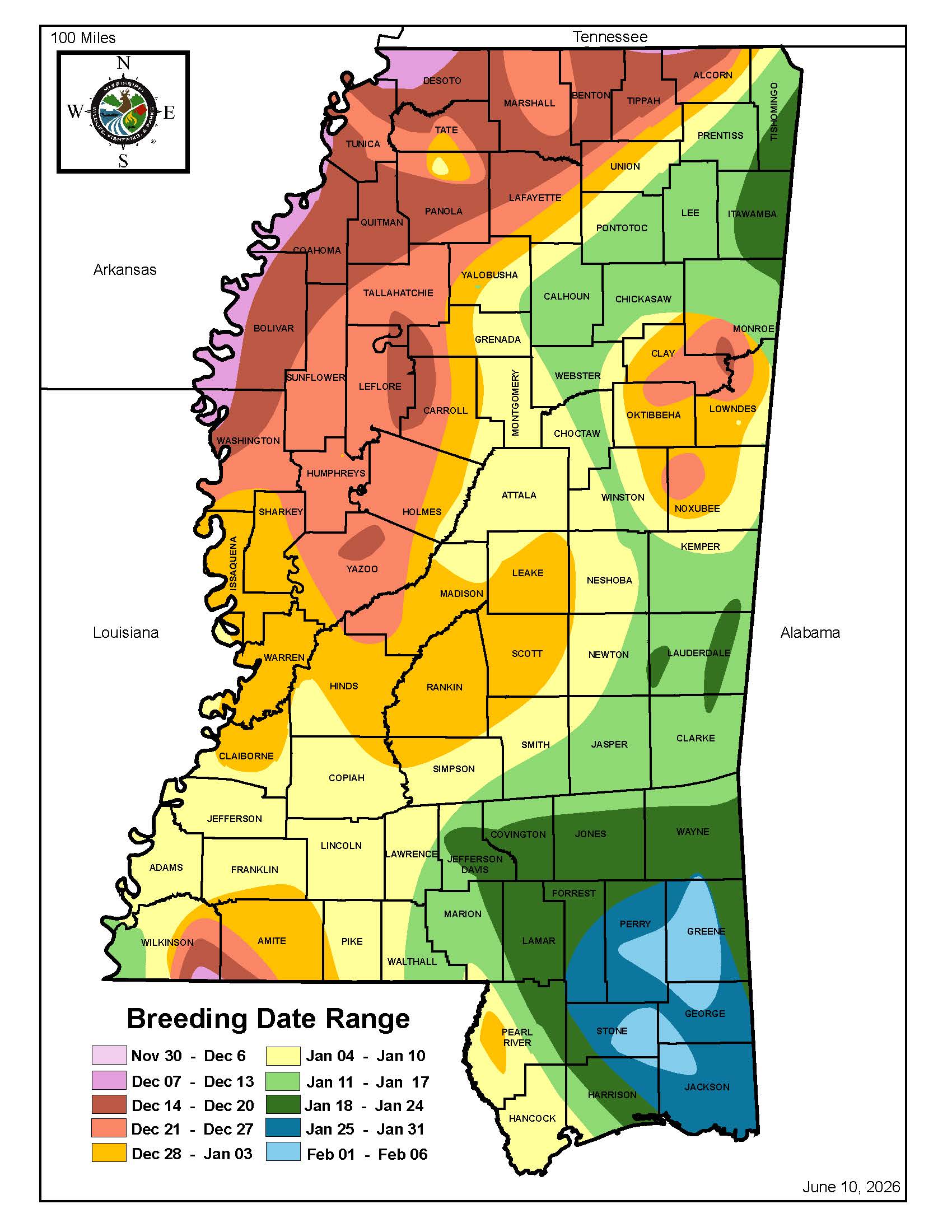
In Mississippi, for example, peak breeding may occur during December in some populations, January in others, and even in February within some portions of the state.
Consequently, hunters should not assume that the rut occurs at the same time across an entire state or that the breeding season observed in northern states applies to southern deer populations.
Phase 1: Pre-Rut — The Searching Phase
The Pre-Rut is characterized by increasing testosterone levels, heightened social interactions, and an increase in buck movement as males begin searching for receptive does.
During this period, most adult does have not yet entered estrus, but bucks are already physiologically prepared to breed. The relatively limited availability of receptive females encourages bucks to spend considerable time traveling, investigating scent, and checking areas frequented by does.
Common behaviors during the Pre-Rut include increased scraping and rubbing activity, sparring and aggressive encounters between bucks, increased investigation of doe groups, and expanded movement beyond established bedding and feeding areas.
Scrapes are particularly important during this period. Bucks use scrapes as communication sites, depositing scent from glands and urine while investigating scent left by other deer. Although scrapes can be used throughout much of the year, activity often increases as the breeding season approaches.
Rubbing activity also becomes more noticeable. While rubbing initially helps remove velvet from antlers, subsequent rubbing serves additional purposes, including scent communication and interactions associated with social status.
Because receptive does are relatively uncommon, bucks may travel considerable distances searching for early breeding opportunities. This can increase their likelihood of being observed by hunters, particularly during daylight hours.
Research from Mississippi State University has demonstrated that hunters may observe more bucks during the period preceding peak conception than during the actual peak breeding period.
From a hunting perspective, the Pre-Rut can provide excellent opportunities to encounter mature bucks that ordinarily maintain more predictable and restricted movement patterns.
Phase 2: Early-Rut — Breeding Activity Accelerates
The Early-Rut represents the transition from predominantly searching behavior to increasingly frequent breeding activity.
During this phase, a growing proportion of adult does enter estrus, making receptive females more available throughout the population.
As the availability of receptive does increases, bucks begin devoting more time to pursuing, tending, and breeding individual females.
One of the most recognizable behaviors associated with this period is chasing. Bucks may follow does through fields, timber stands, food plots, and other habitats while attempting to determine their reproductive status.
However, chasing does not always mean they are receptive. Bucks frequently pursue females approaching estrus, and those does may initially avoid the buck's advances.
As a doe approaches her receptive period, a buck may remain near her for an extended time, discouraging competing males and waiting for an opportunity to breed.
This behavior is commonly called tending.
As more does become receptive, bucks may spend less time traveling broadly across the landscape and more time remaining with individual females.
Consequently, some bucks may become less visible even as breeding activity increases.
Phase 3: Peak-Rut — The Height of Conception
The Peak-Rut represents the period when the greatest number of does within a population are successfully bred.
This is the biological peak of the breeding season.
During this period, a relatively large proportion of adult does enter estrus, and bucks devote substantial time to locating, tending, and breeding receptive females.
Although an individual doe's period of receptivity is relatively short, typically around 24–36 hours, different does enter estrus at different times. This creates a concentrated period of breeding activity across the population.
A buck may remain with a receptive doe for an extended period, breeding her multiple times and attempting to prevent other bucks from gaining access.
This tending behavior can substantially reduce the buck's movement across the landscape.
As a result, the Peak-Rut presents an interesting contradiction: the period of greatest breeding activity is not necessarily the period of greatest observable buck movement.
This phenomenon helps explain why hunters sometimes report that the rut appears to have stopped just when breeding activity is actually at its highest.
This is commonly referred to as the lockdown period.
Phase 4: Late-Rut — Breeding Activity Declines
The Late-Rut occurs as the proportion of receptive does begins declining following the peak conception period.
By this point, many adult does have already been bred, reducing the number of females available for breeding.
However, some does continue entering estrus, and bucks remain highly motivated to locate these remaining receptive females.
As breeding opportunities become less common, some bucks may begin increasing their searching activity again.
This can create another period of noticeable movement as bucks travel between doe groups, investigate bedding areas, and search for females that have not yet been bred.
In some populations, hunters may observe a temporary increase in buck sightings after the peak conception period as bucks resume searching rather than tending individual does.
Phase 5: Post-Rut — Recovery and Remaining Breeding Opportunities
The Post-Rut represents the period following the primary concentration of breeding activity.
By this time, most adult does within the population have been successfully bred, and opportunities for additional reproduction become increasingly limited.
As breeding activity declines, bucks gradually shift their priorities away from searching and competing for receptive females and toward restoring the energy reserves depleted during the breeding season.
Bucks have experienced substantial physical stress from weeks of increased movement, reduced feeding, and reproductive competition.
During the rut, bucks substantially reduce feeding while spending considerable energy pursuing females, competing with other males, and breeding. These changes can result in significant losses of body mass and stored energy. Bucks can generally lose 20–30% of their body weight during the rut.
Feeding activity becomes increasingly important during the Post-Rut, particularly for bucks that experienced substantial weight loss.
Depending on habitat conditions and food availability, bucks may concentrate their activity around productive food sources, remaining hard mast, food plots, and naturally occurring browse.
Movement patterns may also become more predictable as bucks return to behaviors associated with feeding, bedding, and energy conservation.
However, the Post-Rut does not mean breeding has completely ended.
Some does that were not successfully bred during their first estrous period may enter estrus again approximately 28 days later. Additionally, some younger females, particularly doe fawns that reach sufficient physical development, may become reproductively active later in the season.
These remaining opportunities can stimulate additional searching and chasing behavior.
In some populations, this activity is commonly referred to as the secondary rut.
The secondary rut is not a completely separate reproductive season. Rather, it represents continued breeding associated with a larger proportion of females that were not bred during the primary breeding period or that became reproductively active later. This is more common in populations with a sex ratio skewed toward does.
For wildlife managers, the Post-Rut is an important period because the nutritional condition of bucks following the breeding season can influence their ability to recover, maintain body condition, and begin their next antler-growing season.
Where deer populations exceed the nutritional carrying capacity of their habitat, limited food availability can make this recovery more difficult.
Maintaining deer populations at appropriate densities and improving the availability of quality native forage can help reduce nutritional stress following the breeding season.
How Weather, Moon Phase, and Hunting Pressure Influence Rut Activity
Mississippi State University studies examining reproductive timing found that individual conception dates were not related to moon phase, weather, hunting pressure, or any other factors. When it was time to breed, deer bred.
Rut Timing Varies Across Mississippi
Mississippi provides one of the clearest examples of regional variation in white-tailed deer breeding chronology.
Unlike many northern deer populations, where breeding is strongly concentrated during November, Mississippi deer populations can exhibit peak conception dates extending from late fall through late winter.
Research from Mississippi State University identifies peak breeding dates ranging from late November in portions of northwestern Mississippi to approximately mid-February in portions of southeastern Mississippi.
This variation reflects a combination of historical population origins, genetic influences, and regional reproductive patterns.
Historical deer restoration efforts involved moving deer from different geographic sources, as well as from pockets of existing deer populations within the state, contributing to the diverse breeding chronology observed in Mississippi.
The Mississippi Department of Wildlife, Fisheries, and Parks has developed a breeding-date map using biological information collected during deer herd health evaluations for almost 50 years.
These evaluations include reproductive measurements that allow biologists to estimate conception dates and determine the average breeding chronology of different deer populations.
By measuring fetuses and estimating gestational age, biologists can calculate approximate breeding dates for individual females.
Hunters can use the MDWFP Deer Breeding Date Map to estimate the average conception date for their area.
However, this map represents regional estimates, and actual breeding chronology may vary somewhat between individual properties.
As more data are collected and regional gaps are filled, this map will be updated every few years.
Final Thoughts
The white-tailed deer rut is a complex reproductive process that unfolds over several weeks rather than a single period of intense chasing activity.
Although the five phases—Pre-Rut, Early-Rut, Peak-Rut, Late-Rut, and Post-Rut—provide a useful way to describe changing behavior, the transition between these phases is gradual, and breeding activity can occur throughout the entire period.
Perhaps the most important distinction is that the greatest amount of observable rutting activity does not necessarily coincide with the greatest amount of actual breeding.
Bucks may be most visible when they are searching for relatively scarce receptive does, while the greatest concentration of conceptions occurs when more does are available and bucks spend greater amounts of time tending individual females.
For hunters and wildlife managers, understanding this relationship can improve the interpretation of deer movement and help identify periods when mature bucks may be more vulnerable to harvest.
Ultimately, the rut should not be viewed as a single event on the calendar, but as a continuous biological process driven primarily by reproductive physiology and the availability of receptive females.
To view wildlife management information, visit: