Written by: Kevin Owens
Edits by: Pierce Young
Mississippi is a deer-rich state. The state’s white-tailed deer herd is estimated at roughly 1.75 million animals, giving Mississippi one of the highest deer densities in the country.
But more deer is not always better.
The more important question isn't simply:
"How many deer do I have?"
It is:
"How many deer can this property support without degrading the habitat or reducing the quality and productivity of the herd in the future?"
That is limit of the number of deer a habitat can sustain is called carrying capacity.
Here are several signs Mississippi landowners can use to determine whether deer numbers may be exceeding what their property can comfortably support.
Preferred Plants Are Being Browsed Heavily
One of the most reliable warning signs is excessive browsing on plants deer prefer vs non-preferred plants.
White-tailed deer are selective feeders. They do not simply eat whatever vegetation is available, unless they have to. They tend to seek out the most nutritious and desirable plants first.
Walk through your woods, pine stands, thickets, and wildlife openings and look at the vegetation from a deer's perspective.
Are young shrubs being repeatedly nipped down to the largest stems? Are desirable broadleaf plants difficult to find? Do many plants have the characteristic appearance of damage from repeated browsing?
If the answer is yes, deer may be consuming forage faster than the habitat can produce it.
A healthy property should have enough vegetation that deer can feed without continually removing the newest growth from the most desirable plants.
A great resource to know which plants to look for in Mississippi is: A Guide to Evaluating Browsing Pressure by White-tailed Deer in Mississippi (by MDWFP)
Native Vegetation Is Becoming Less Diverse
Heavy deer browsing does not necessarily remove every plant from the landscape. Instead, deer can gradually change which plants survive.
Highly preferred plants may decline while less-preferred or browse-tolerant species become more common. Over time, that can simplify the plant community and reduce the variety of forage available to deer and other wildlife.
A property can have plenty of green vegetation and still have inadequate high-quality deer forage.
You See a Noticeable "Browse Line"
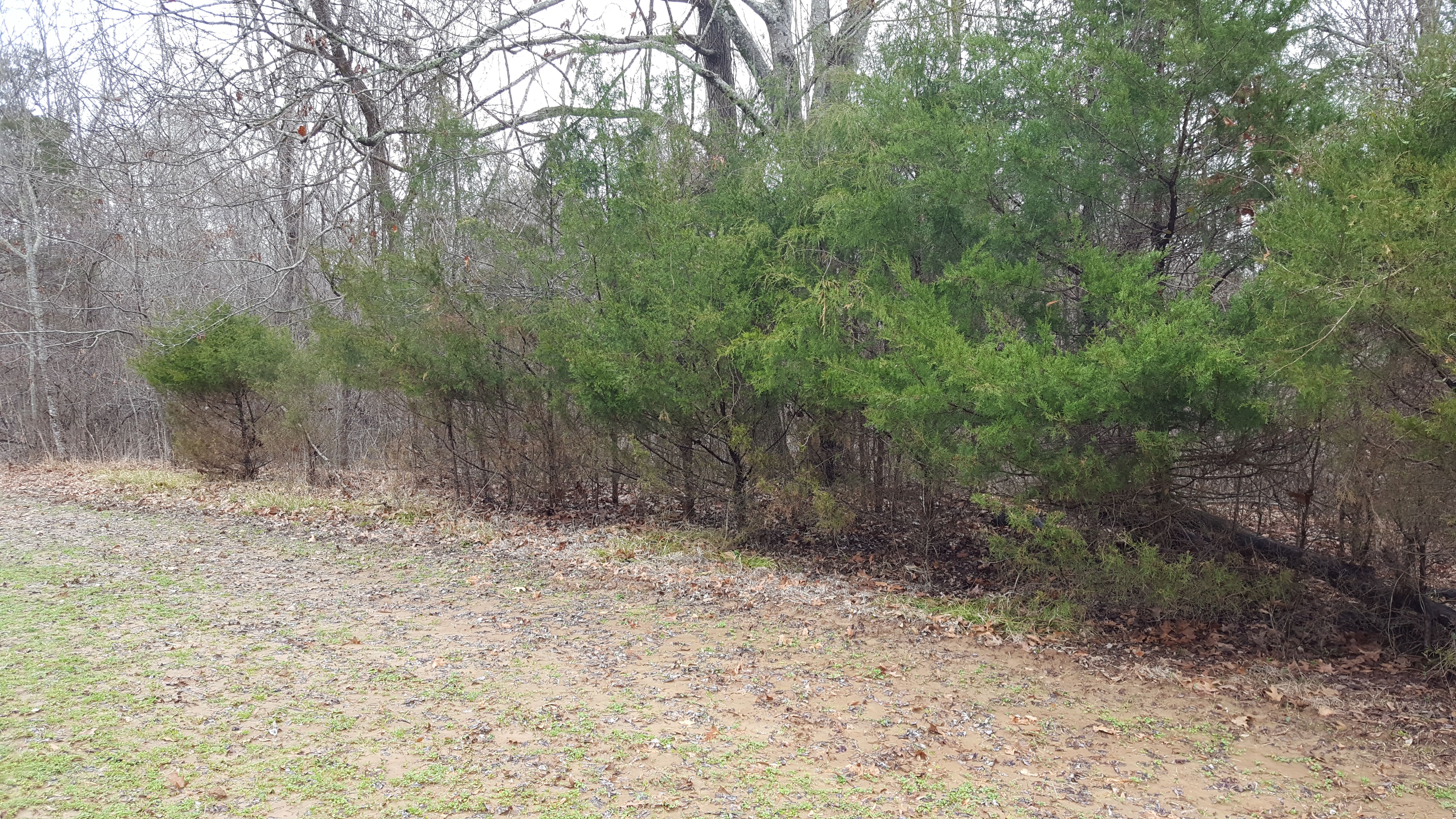
Another warning sign is a distinct browse line. A browse line occurs when deer repeatedly consume vegetation within their reach, leaving vegetation above the normal browsing height while the lower portions of shrubs and young trees are heavily browsed below.
Look at shrubs, young hardwoods, vines, and other woody vegetation.
Food Plots Are Being Heavily Browsed
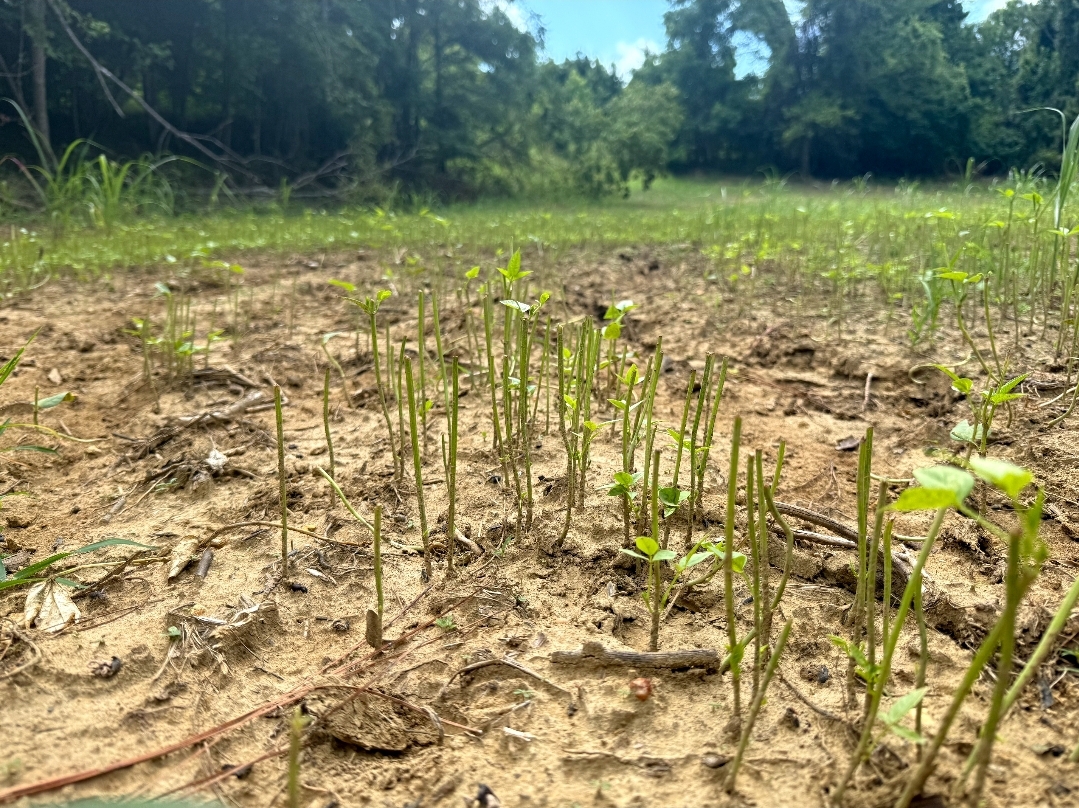
Food plots can provide excellent supplemental forage, but they can also serve as an easy way to recognize heavy deer pressure.
If a food plot is routinely eaten down almost immediately after plants emerge, the problem may not be the food plot itself. It may be the number of deer using it.
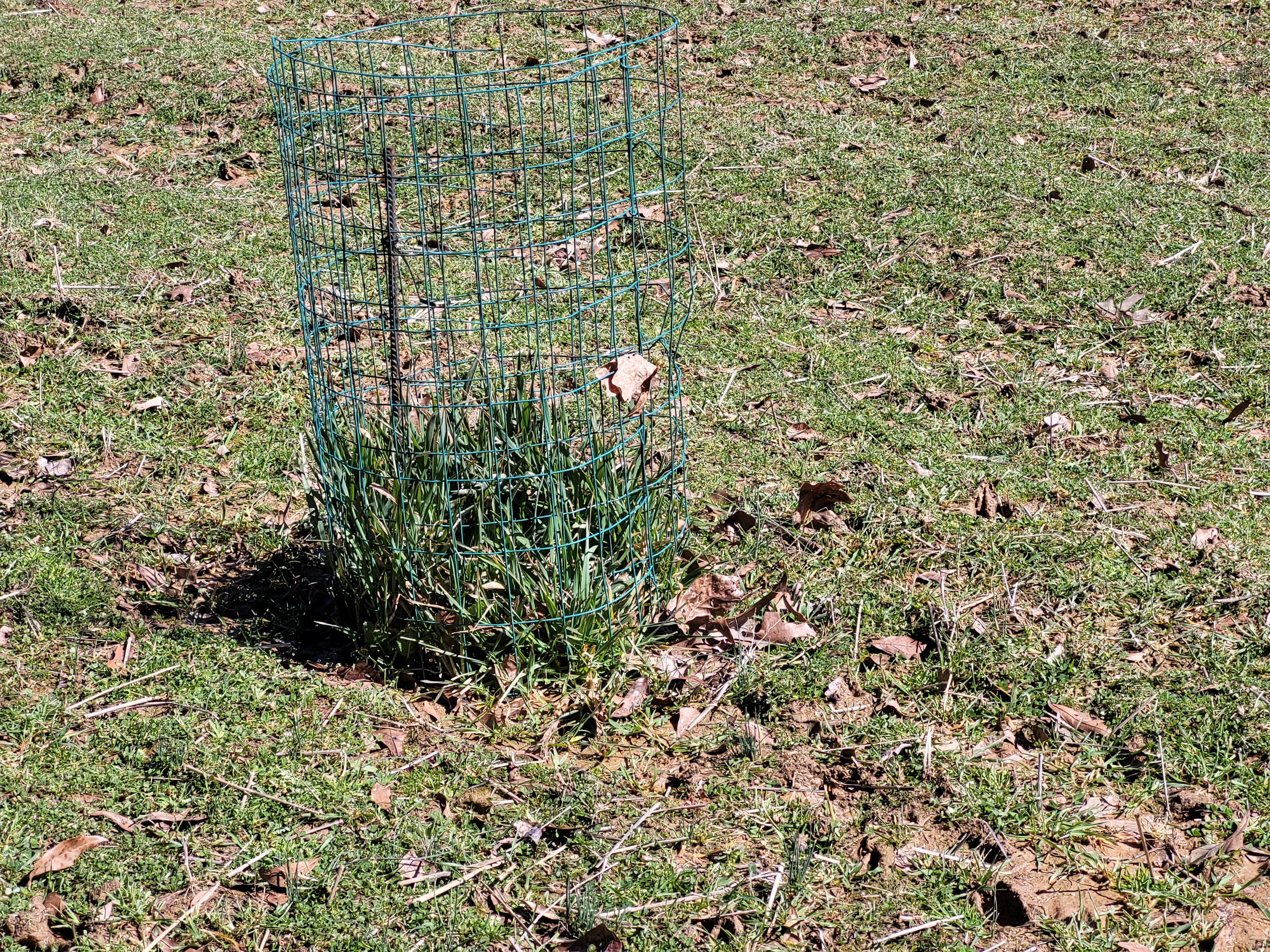
If deer continually remove new growth faster than plants can recover, the plot may be carrying more deer than the available forage can support.
An easy way to evaluate this is to use a small exclusion cage. An exclusion cage is simply a fenced area that prevents deer from reaching the vegetation. Compare the vegetation inside the cage with the vegetation outside it. If the difference is dramatic, deer are consuming a substantial portion of the available forage.
Deer Damage Is Increasing in Agricultural Fields
Crop damage is another obvious warning sign, particularly on properties surrounded by agriculture. Deer feed on a wide variety of plants, and Mississippi farmers can experience significant crop damage when deer numbers are high.
If deer repeatedly move into agricultural fields and remove significant amounts of growing vegetation on a large scale, the problem may be more than simply having an attractive food source. Crop damage should be considered along with other indicators before concluding that deer numbers are excessive.
Young Trees Struggle to Become Established
Too many deer can affect much more than the food plot. Heavy browsing can prevent desirable trees and shrubs from growing out of the understory and becoming part of the next generation of forest vegetation.
Pay particular attention to young hardwoods, soft mast-producing trees, shrubs, and other plants that are important to wildlife. If seedlings repeatedly grow a few inches or a few feet and then get browsed back, deer may be preventing regeneration.
This is especially important on properties being managed for timber production, natural hardwood regeneration, turkey habitat, or overall forest diversity. A forest can look mature and healthy from a distance while having a serious regeneration problem underneath the canopy.
Deer Body Condition Is Declining
Pay attention to the physical condition of harvested deer. Body weight, age, and reproductive condition can provide valuable information about the relationship between the herd and the habitat.
If adult does consistently appear to have low body weights, or if harvested deer show declining body condition over several years, habitat limitations may be contributing to the problem.
However, body condition should be evaluated carefully. Drought, disease, poor-quality habitat, seasonal conditions, and other factors can affect deer condition. That is why it is better to look at long-term trends rather than making management decisions based on a few individual deer.
Mississippi's Deer Management Assistance Program (DMAP) recommends collecting harvest information such as age, sex, weight, and reproductive condition to help evaluate the herd. For more information on joining DMAP to know how your doe body weights compare by age visit: www.mdwfp.com/DMAP
Fawn Production Is Low
Reproduction can also provide clues about whether deer numbers are out of balance with the habitat.
When deer populations are maintained at appropriate levels relative to habitat quality proving good forage and cover, reproduction can be strong. When habitat quality deteriorates, reproductive performance suffers.
Overbrowsed habitat is often very poor cover for fawns, and causes increased success by predators.
A consistently declining fawn crop combined with heavy browsing and poor body condition should get a landowner's attention.
Putting It All Together
The best approach is to pair observations with habitat monitoring.
Keep records of:
- Deer seen during standardized observation periods
- Trail-camera observations
- Buck-to-doe ratios
- Fawn observations
- Deer harvested
- Deer weights
- Antler measurements
- Browse pressure
- Food-plot performance
- Native plant abundance
- Forest regeneration
What Should You Do If You Have Too Many Deer?
If the evidence suggests that deer numbers are exceeding the property's carrying capacity, the most direct management tool is usually an appropriately planned antlerless harvest. However, simply shooting more does is not always the complete answer.
First determine whether your property is large enough to influence the local deer population. MDWFP notes that properties smaller than roughly 500 often have a hard time independently trying to change deer population. Neighboring properties and deer movement can have a major influence.
For smaller properties, working with neighboring landowners through a deer-management cooperative can make harvest efforts much more effective.
It is also important to continue improving habitat if you can. Prescribed fire, timber management, forest regeneration, native vegetation management, properly designed wildlife openings, and quality food plots can all influence the amount and quality of forage available.
The goal should be to bring deer numbers and habitat quality into balance, rather than simply maximizing either one.
Summary
Mississippi has an abundance of white-tailed deer, and it's not uncommon for a property to have more deer than it's habitat can support.
The clearest warning signs are often found in the vegetation first rather than in the deer themselves. If preferred plants are repeatedly browsed, young trees cannot escape the browse line, food plots are continually eaten down, native plant diversity is declining, and deer body condition or reproduction is suffering, the herd is exceeding the habitat's carrying capacity.
The best deer managers learn to watch both sides of the equation: the deer and the habitat.
And when the evidence points toward an overabundant herd, consider working with a wildlife biologist and neighboring landowners to develop an appropriate doe harvest strategy.
A healthy Mississippi deer property is not necessarily the one where you see the most deer. It is the one where the number of deer, quality of the herd, and quality of the habitat are kept in balance.
For more wildlife management information visit: